Home Souvenirs Bring a place home, thoughtfully
Souvenirs Choose Japanese souvenirs by recipient, budget, shelf life, baggage and region, with food, craft, stationery and customs guidance.
Last reviewed: August 23, 2026
CHOOSE · CARRY · SHARE
Start with the recipient and the journey home. This is not a product ranking. Choose through budget, group size, shelf life, baggage and regional context. Price bands are broad planning cues and vary by shop and season.
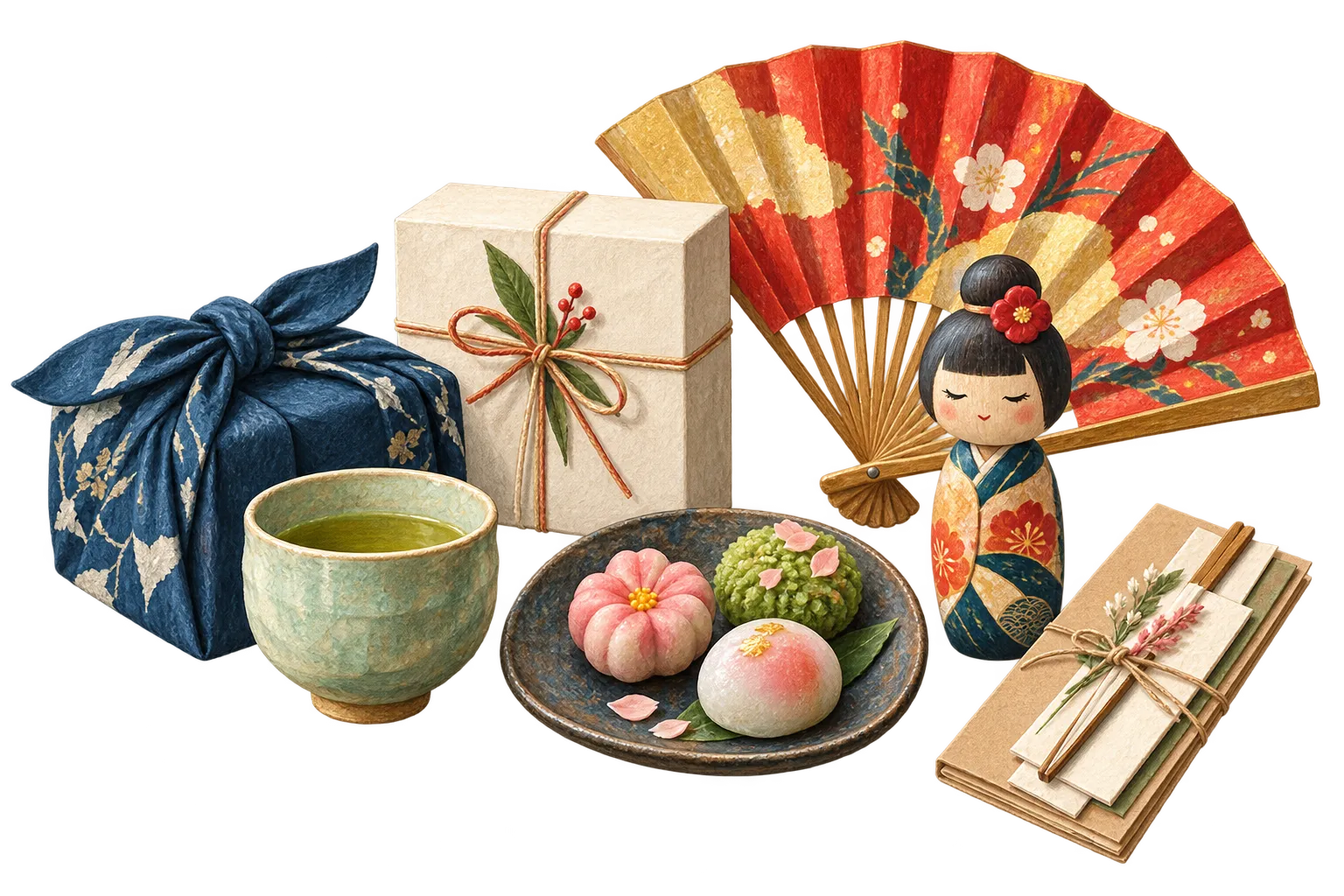
12 ideas Browse 10 cities Packing & customs Original transparent editorial illustration made for Local Japan. FOUR WAYS TO CHOOSE
Four decisions before you buy. 12 STARTING POINTS
Read the travel conditions behind familiar gifts. This list does not guarantee a particular product or shop inventory. Check labels and ask staff at the point of purchase.
01 Food
Individually packed rice crackers Easy to share and available in many regional flavours.
Budget cue Small gift · often under ¥1,000
Packing Easy to pack Check Check seafood, soy, wheat and other allergen labels.02 Food
Regional boxed sweets A practical choice for a workplace, class or large family.
Budget cue Small gift · often under ¥1,000
Packing Easy to pack Check Compare the piece count, best-before date and storage instructions.03 Food
Tea bags or sealed loose-leaf tea Compact, light and connected to the region where it was produced.
Budget cue Small gift · often under ¥1,000
Packing Easy to pack Check Choose sealed packaging and check the destination country’s food rules.04 Food
Seasonal wagashi Colour, shape and ingredients can express a particular season.
Budget cue Considered gift · around ¥1,000–3,000
Packing Pack with care Check Many fresh sweets have a short shelf life and may need careful storage.05 Textile
Furoshiki wrapping cloth The wrapping becomes a reusable gift in its own right.
Budget cue Considered gift · around ¥1,000–3,000
Packing Easy to pack Check Ask about size, fabric and washing instructions.06 Textile
Tenugui cloth Flat, light and available in designs connected to seasons and places.
Budget cue Small gift · often under ¥1,000
Packing Easy to pack Check Traditional unfinished edges are intentional and help the cloth dry quickly.07 Paper & stationery
Washi paper and stationery Useful, easy to pack and available from simple to highly crafted.
Budget cue Small gift · often under ¥1,000
Packing Easy to pack Check Keep handmade paper flat and dry during travel.08 Craft
A small regional ceramic piece Clay, glaze and firing traditions differ from one area to another.
Budget cue Special piece · often ¥3,000+
Packing Pack with care Check Ask the shop to wrap it for travel and keep it in the centre of checked baggage.09 Craft
Compact lacquerware A light, durable object can carry a long regional craft story.
Budget cue Special piece · often ¥3,000+
Packing Pack with care Check Confirm the material, care instructions and whether animal or protected materials are used.10 Craft
Folding fan Compact, practical and connected to paper, bamboo and painting techniques.
Budget cue Considered gift · around ¥1,000–3,000
Packing Easy to pack Check Protect the ribs from bending and avoid unverified antique or wildlife materials.11 Craft
Small woodcraft Shape, wood grain and carving can express a local making tradition.
Budget cue Considered gift · around ¥1,000–3,000
Packing Pack with care Check Check the wood species and destination import rules before buying.12 Textile
Regionally made textile pouch A useful everyday object makes pattern and technique easier to keep using.
Budget cue Considered gift · around ¥1,000–3,000
Packing Easy to pack Check Look for the maker, place of production and care label rather than only a Japanese-looking pattern.10 CITY LENSES
Start with the city you visited. Use these as starting points, then check the material, maker and place of production rather than relying on a regional-looking label.
Tokyo Stationery, dyed textiles and carefully packed sweets Compare neighbourhood craft shops with major station and airport options. Open city guide → Yokohama Textiles, port-city confectionery and modern design goods Look beyond generic harbour motifs and check the actual maker or production area. Open city guide → Kyoto Tea, seasonal sweets, washi and textiles Fresh sweets can be delicate; buy them near the end of the trip. Open city guide → Osaka Shareable savoury snacks and playful food-culture gifts Check allergens and whether the item actually comes from the region. Open city guide → Nagoya Ceramics, textiles and long-lasting baked sweets Protect ceramics carefully and compare city shops with Chubu airport. Open city guide → Sapporo Baked sweets, tea and Hokkaido craftwork Dairy-rich or chilled products may be harder to carry on a long flight. Open city guide → Sendai Woodcraft, textiles and regional confectionery For wood pieces, ask about the material and maker before international travel. Open city guide → Hiroshima Maple-shaped sweets, local crafts and compact food gifts Choose sealed items with a date that fits the rest of your journey. Open city guide → Fukuoka Textiles, ceramics, tea and savoury food gifts Products containing seafood or meat need an extra destination-customs check. Open city guide → Naha Okinawan pottery, dyed textiles and brown-sugar sweets Ceramics need protection; textiles are easier when baggage space is limited. Open city guide →
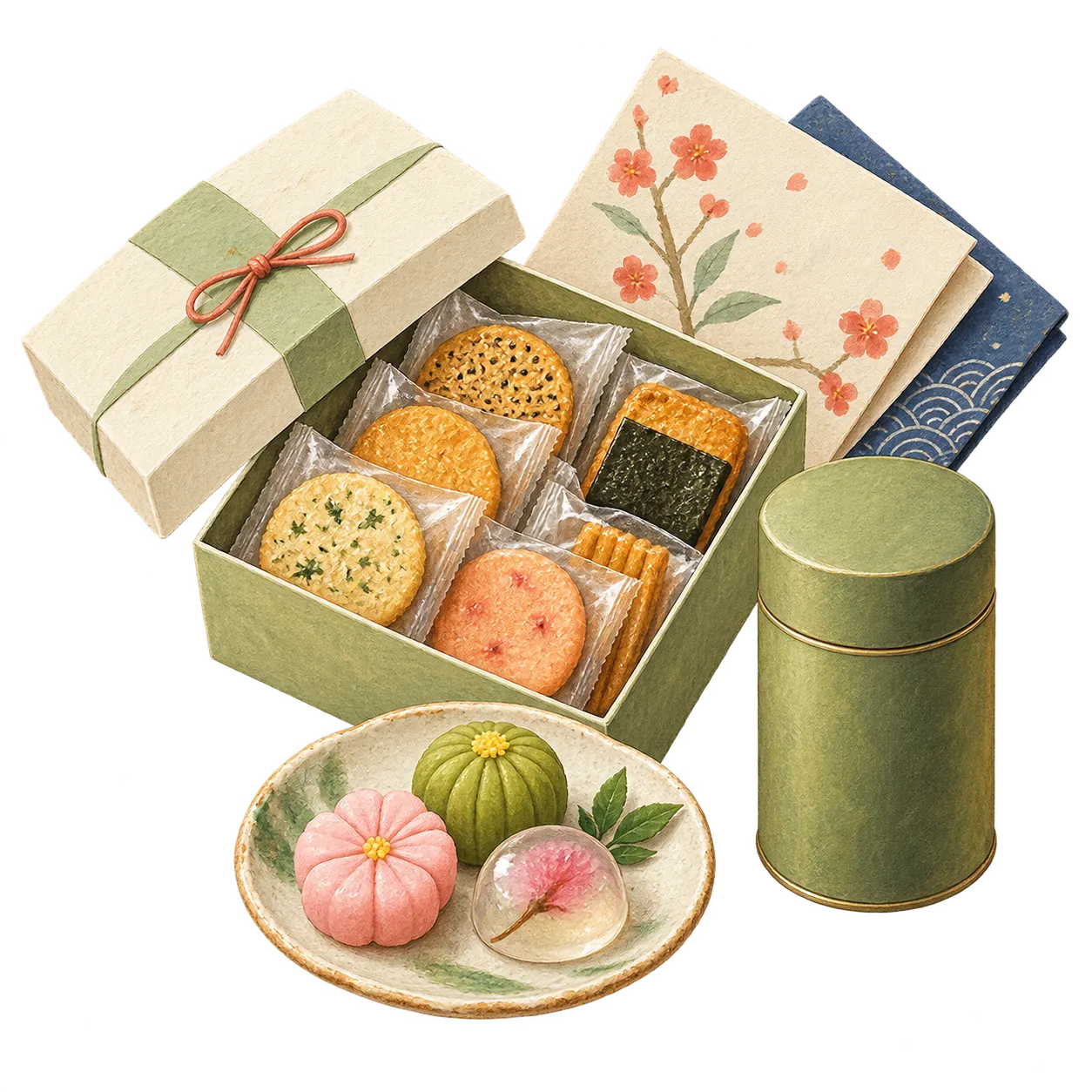 Food gifts that travel wellChoose sealed, shareable food with a date and storage method that fit the rest of your journey.Open guide 02
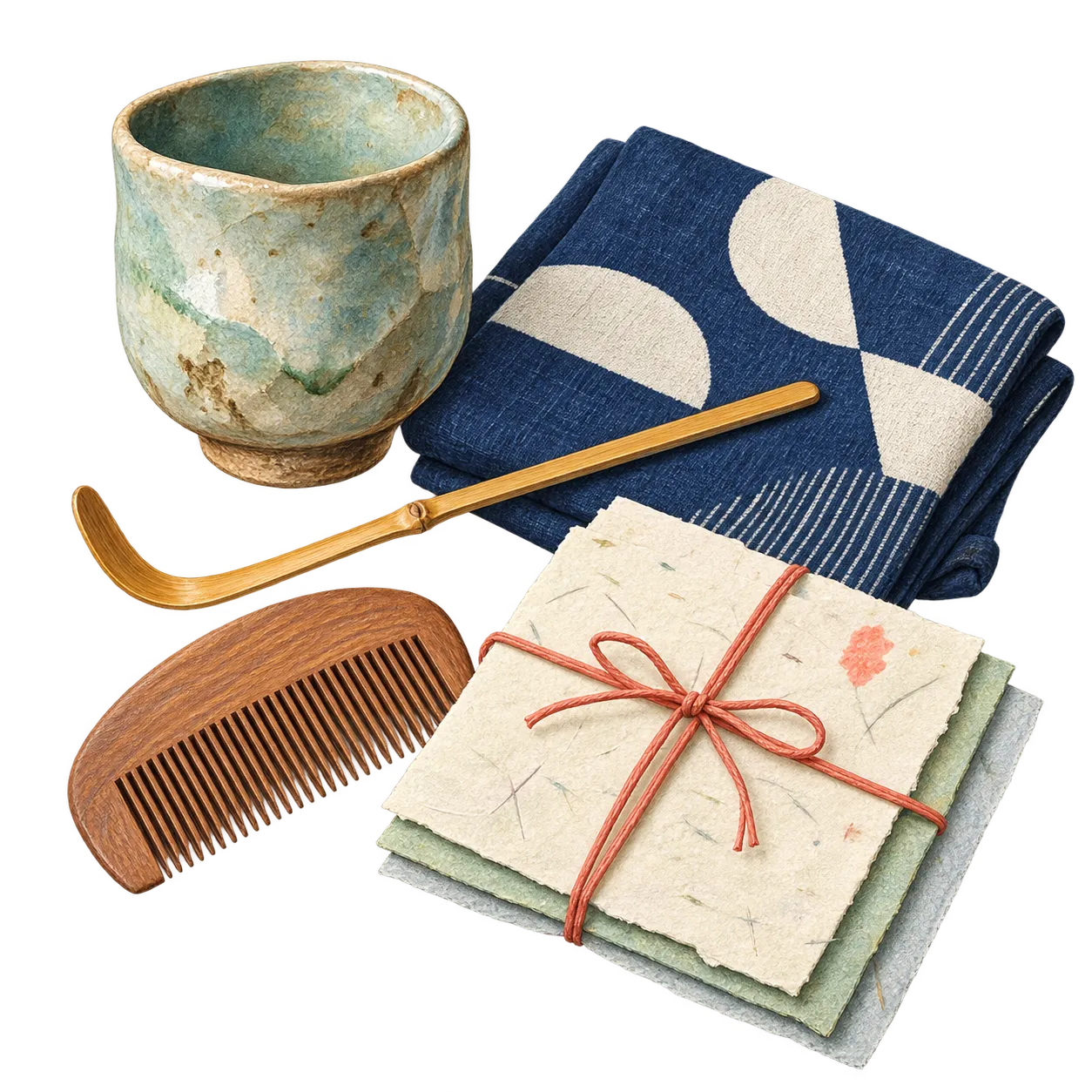 Crafts and stationery with a place behind themLook for the maker, material and region—not only an object that appears Japanese.Open guide 03
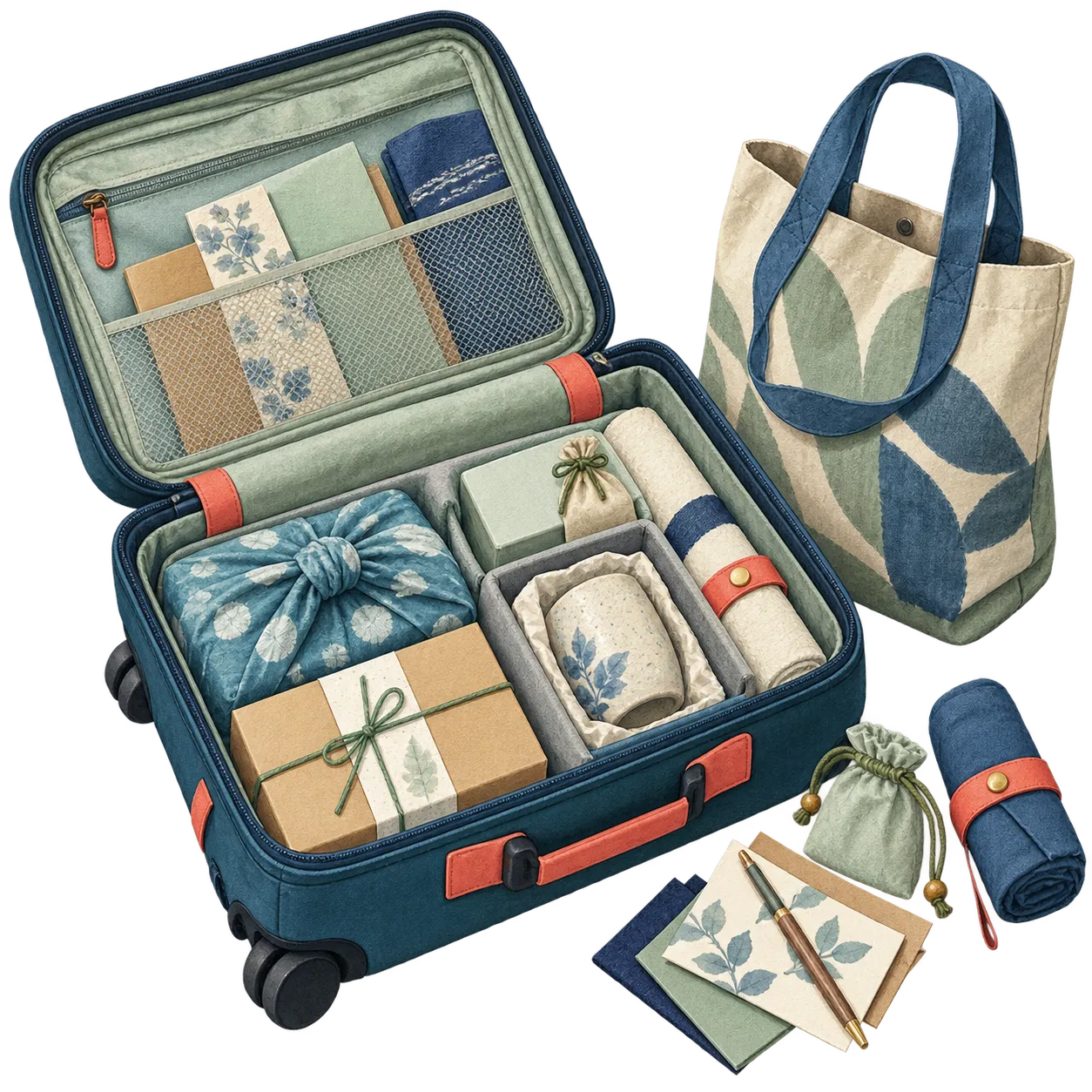 Pack first, then buyLeave space, protect fragile objects and check airline and destination rules before a souvenir becomes a problem.Open guide 04