Choose with context
Food gifts that travel well
Choose sealed, shareable food with a date and storage method that fit the rest of your journey.
Source facts checked
Full article quality audit
TRIP POCKET
Keep this page in your Trip Pocket, ready for the moment the signal fades.
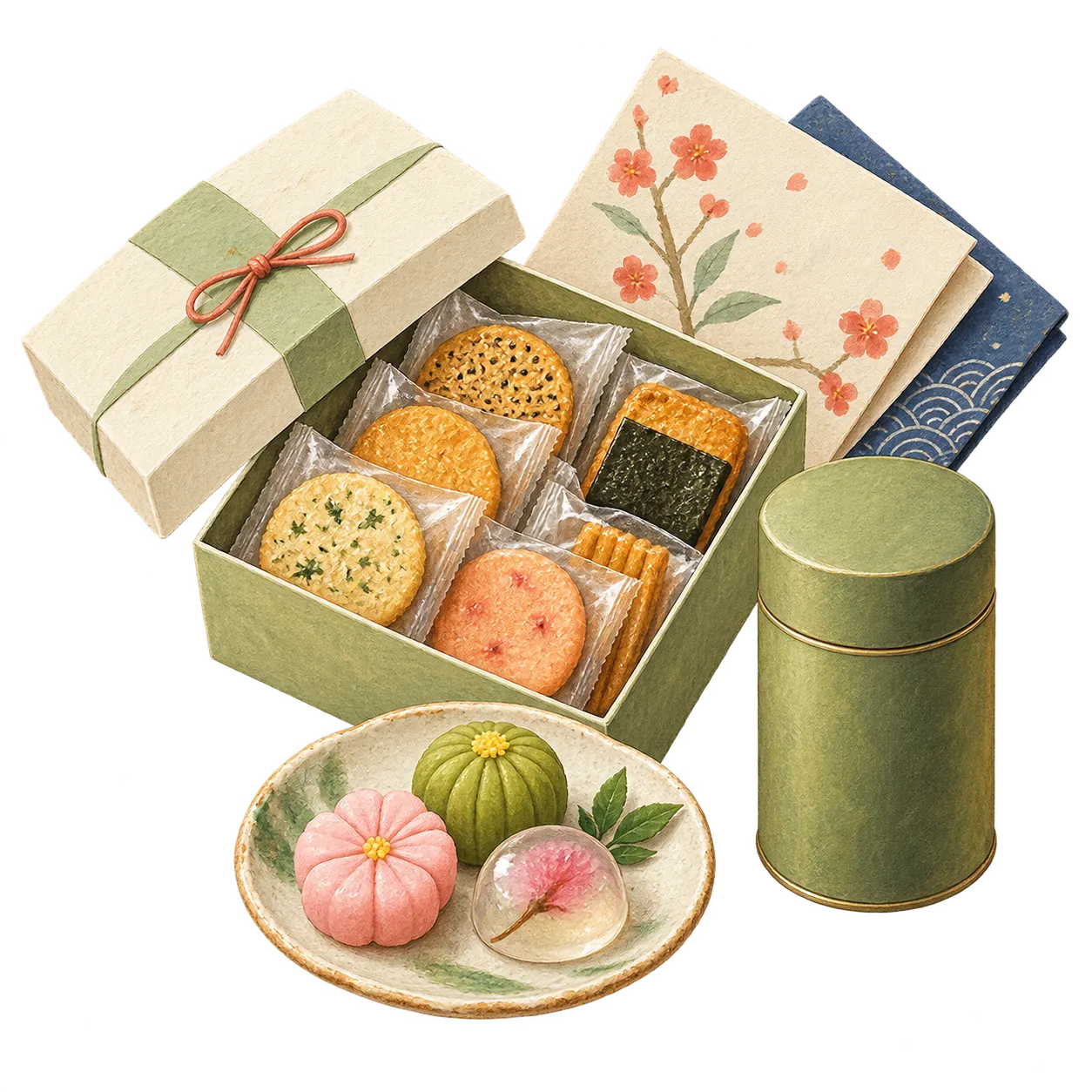
Packaging can make a gift easy to share, but it does not answer every travel question. Read the ingredient, allergen, date and storage information before buying.
01
Start with the journey
- Count the remaining travel days before looking at the best-before date.
- Prefer sealed items that do not need refrigeration for a long journey.
- Keep delicate sweets away from heat and crushing.
02
Choose for the recipient
- Individually packed pieces work well for groups.
- Tea and simple crackers are compact, but ingredients still need checking.
- Fresh wagashi is better for someone you will see soon.
03
Read before you pay
- Check allergens, alcohol, meat, seafood and dairy ingredients.
- Ask staff when an English label is unavailable.
- Confirm the destination country’s food-import rules yourself.
A GIFT YOU CAN PICTURE
Work backwards from the moment it will be shared
Imagine a box bought in Kyoto on Monday, carried through Osaka in summer and opened by twelve colleagues after a long flight on Friday. “Beautiful” and “individually wrapped” are not enough. Count pieces, travel days and people; then read storage, best-before date and allergens. If the route includes heat or repeated hotel changes, tea or a dry baked item may tell a better story than a delicate fresh sweet.
Regional food is most engaging when the gift can be explained in one honest sentence: the ingredient came from this area, the shape marks this season or the shop has a local history. Keep that explanation with a photograph of the label, not an unsupported claim of authenticity. Current destination-country import rules still decide whether meat, dairy, fruit, seeds or other ingredients can cross the border.