Choose with context
What omiyage means in Japan
Omiyage is often a way to bring a place back to people who were not on the trip.
Source facts checked
Full article quality audit
TRIP POCKET
Keep this page in your Trip Pocket, ready for the moment the signal fades.
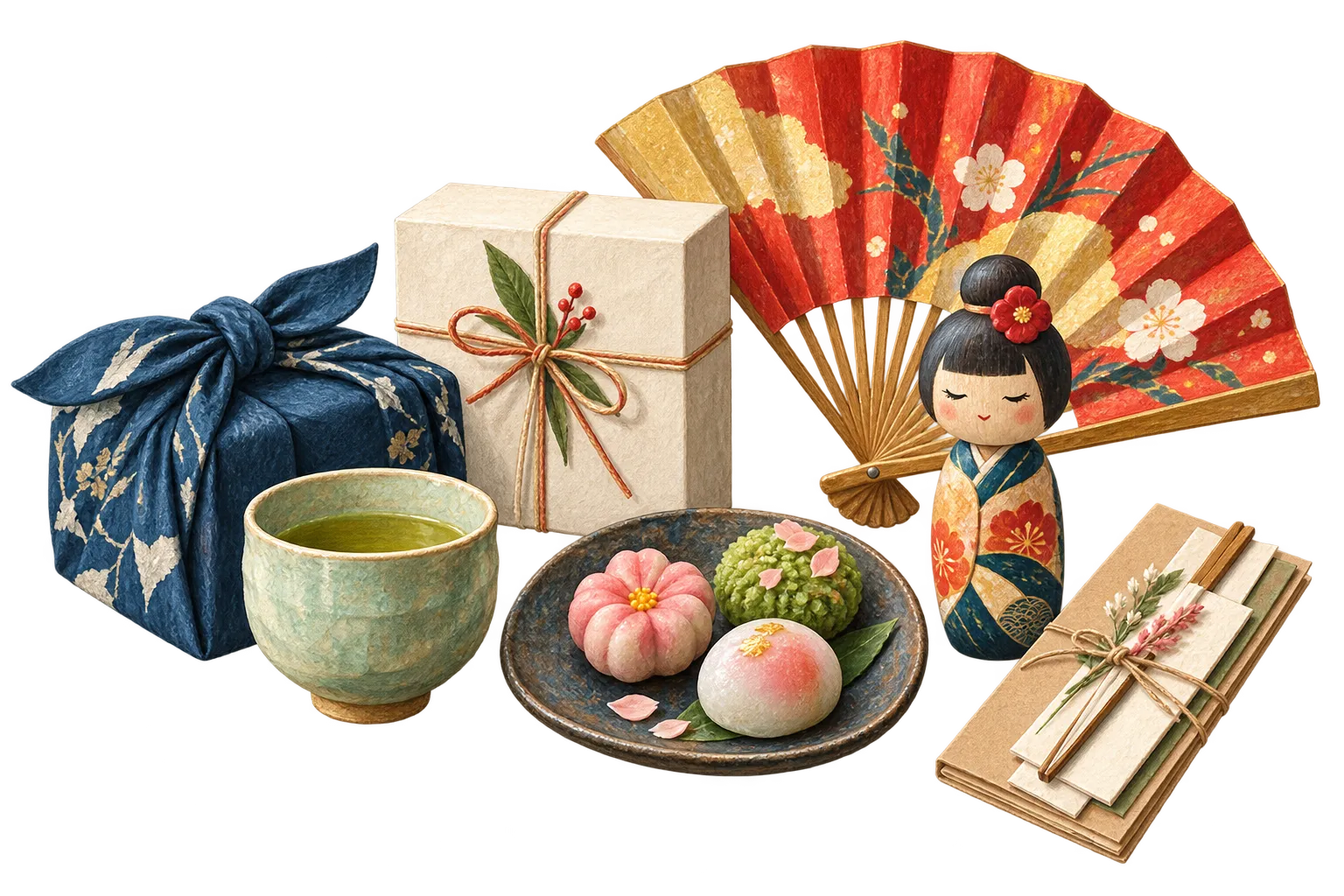
The useful idea is not “buy something Japanese.” It is to choose a small object or food that can be shared with a short story about where you went.
01
A place, not only a product
- Regional flavour, material or technique gives the gift context.
- The explanation can matter more than a famous brand.
- A locally made everyday object can be stronger than decorative packaging.
02
Sharing matters
- Boxes with separate pieces are practical for workplaces and groups.
- A present does not need to be expensive to be thoughtful.
- Do not pressure yourself to buy for everyone.
03
Wrapping and waste
- Ask whether extra wrapping is necessary.
- A furoshiki or reusable bag can become part of the gift.
- Carry a foldable tote because many shops charge for bags.
A GIFT YOU CAN PICTURE
The gift is a small report from the journey
A traveller returns to a workplace with a box of twelve small sweets. The pieces are easy to share, but the meaningful part is the sentence beside them: where the traveller went, what the shape or flavour recalls and why this box fitted the group. Omiyage can acknowledge people who covered work or waited at home, yet it is a social practice with many personal and workplace variations—not a compulsory national rule.
For an international visitor, the idea can be borrowed without copying pressure. Choose fewer people deliberately, give an experience or photograph when an object is unnecessary and say honestly if the item was selected at a station rather than a workshop. Thoughtfulness comes from fit and explanation, not price. Reusable wrapping, a shared item and a recipient who actually wants it can make the exchange lighter for both luggage and waste.