Choose with context
Crafts and stationery with a place behind them
Look for the maker, material and region—not only an object that appears Japanese.
Source facts checked
Full article quality audit
TRIP POCKET
Keep this page in your Trip Pocket, ready for the moment the signal fades.
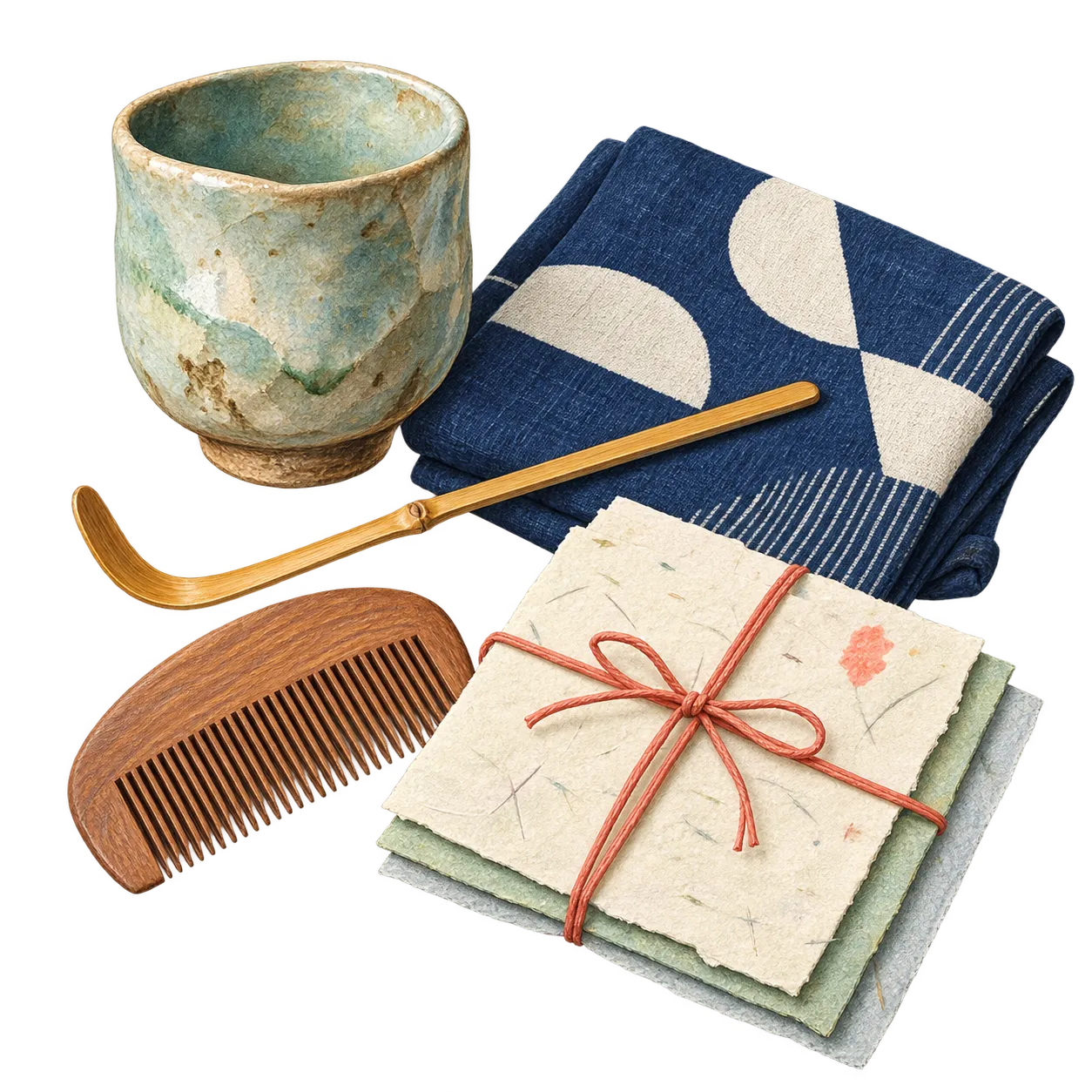
Regional craft is easier to value when you can explain who made it, what it is made from and why the technique developed there.
01
Find the story
- Look for a maker name, workshop or production area.
- Ask whether an item is handmade, workshop-made or mass-produced.
- Keep any care card or maker information with the gift.
02
Match the luggage
- Textiles and paper are light and resilient.
- Ceramics and lacquerware need room and protection.
- Avoid unknown wildlife materials, antique claims and unlabelled wood species.
03
Keep using it
- Choose a size and function that fit the recipient’s daily life.
- Check washing, food-use and storage instructions.
- A workshop-made piece can also carry the memory of an experience.
A GIFT YOU CAN PICTURE
A useful object can carry a deeper place story
Two notebooks may both use a Japanese pattern, yet one names a paper mill, printing method and production area while the other offers only decoration. Hold both, ask how they were made and choose the one whose function fits the recipient. The same method works for cloth, ceramics and lacquerware: begin with use, then material, maker, place and care.
Price does not map neatly to the amount of handwork, and “traditional” does not mean unchanged. A contemporary workshop may use an old technique for a phone case or modern table; that adaptation can be part of a living craft. Keep the maker card and care instructions. For wood, shell, leather or antique-looking material, verify the species and export or destination requirements before emotion turns the object into a customs problem.