Choose with context
Pack first, then buy
Leave space, protect fragile objects and check airline and destination rules before a souvenir becomes a problem.
Source facts checked
Full article quality audit
TRIP POCKET
Keep this page in your Trip Pocket, ready for the moment the signal fades.
A shop allowing a purchase does not mean an airline or destination country will allow the item in every type of baggage.
01
Before shopping
- Measure the empty space and weight left in your baggage.
- Check the airline’s current liquid, sharp-object and battery rules.
- Open the customs website for the country where you will arrive.
02
At the shop
- Ask for travel wrapping for ceramics and glass.
- Keep receipts and material information for unusual craft items.
- Avoid plants, seeds, untreated wood and wildlife materials unless requirements are clear.
03
While packing
- Place fragile objects away from suitcase edges and wheels.
- Keep anything needed at customs easy to reach.
- Do not assume duty-free status overrides baggage or import rules.
A GIFT YOU CAN PICTURE
Run a border check before falling in love with the object
A kitchen knife, bottled sauce, potted plant and lacquered box create four different questions: cabin or checked baggage, liquid allowance, quarantine and protected material. Open the airline and destination authority pages before shopping, save the relevant page offline and show the exact material to the seller. “Duty-free” changes tax treatment; it does not cancel aviation, quarantine or import law.
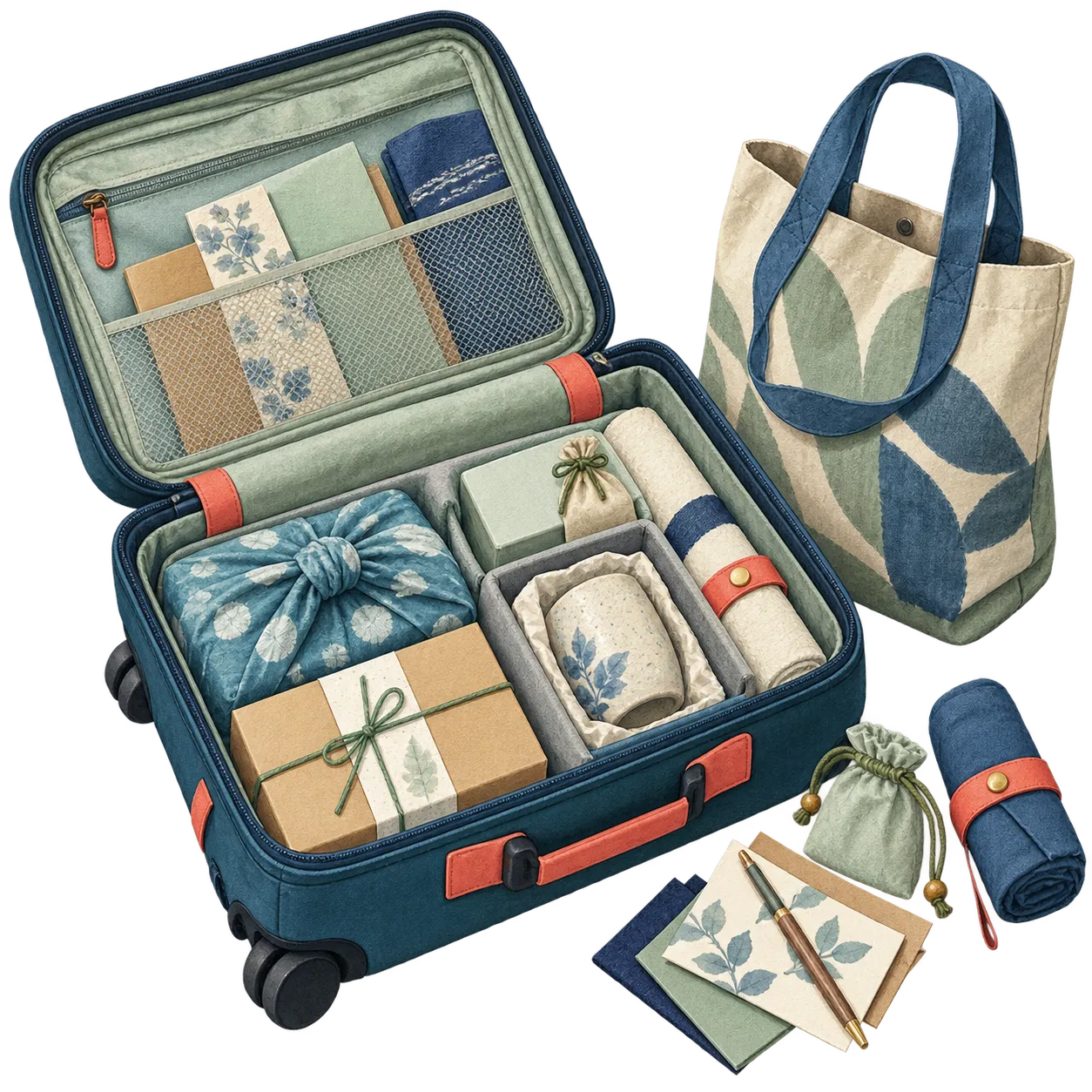
Pack a fragile object as a system: shop wrapping, rigid protection, soft buffer, distance from suitcase walls and access to receipts. Photograph the item and label before closing the bag. If staff cannot identify a plant, wood or animal-derived material, choose another gift rather than guessing at the border. The best packing decision sometimes happens at the shelf: buying a smaller textile or paper object that survives the real journey.