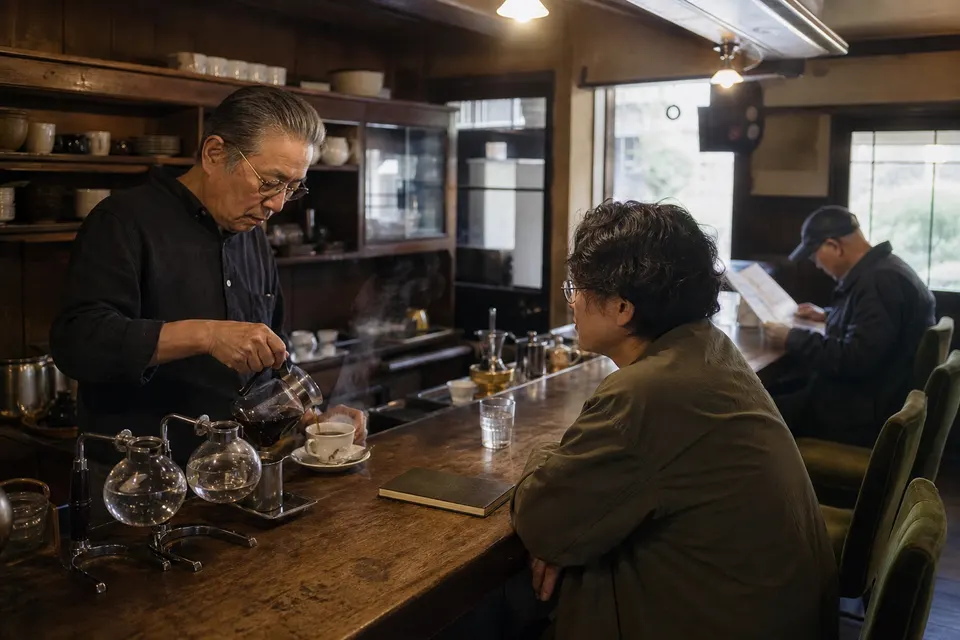
YOUR FIRST VISIT
Coffee first. A little curiosity alongside.
A kissaten is a Japanese café tradition, not a single retro look. Choose a house coffee for the flavour, morning service for breakfast, or a sweet for an afternoon pause. Check the actual shop’s hours, prices, smoking policy and access before settling in.
Already outside a shop? Open the menu guide. Planning a slower day? Read the cultural story and choose a café with a connection that interests you.
Read the story behind the cup →Which one would you order?
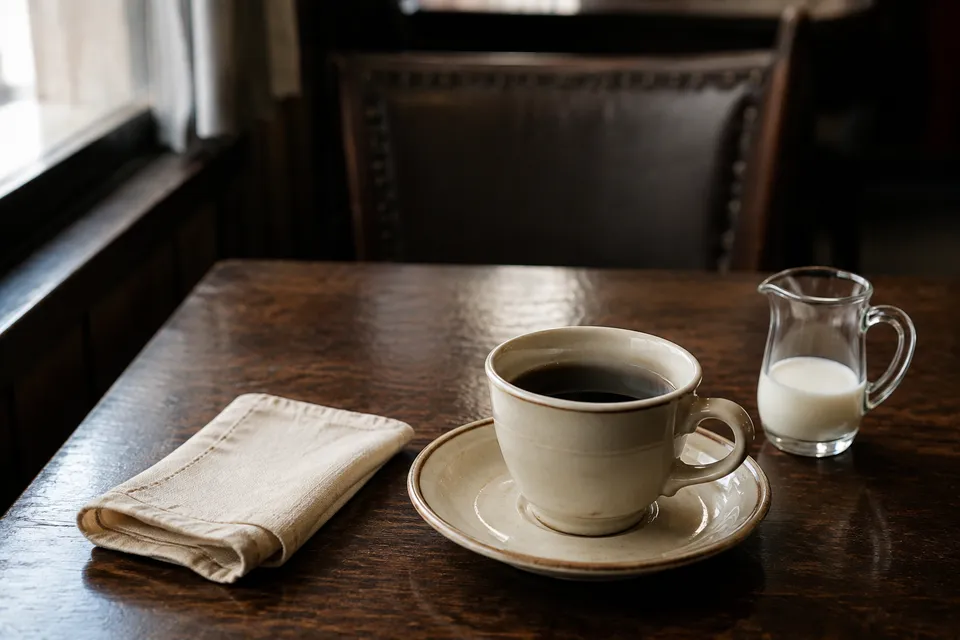
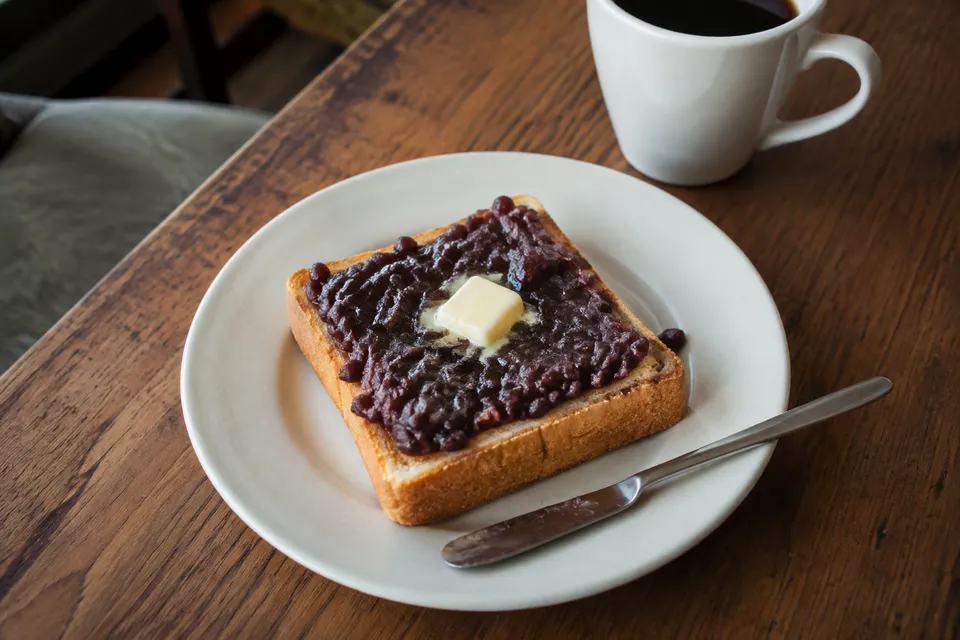
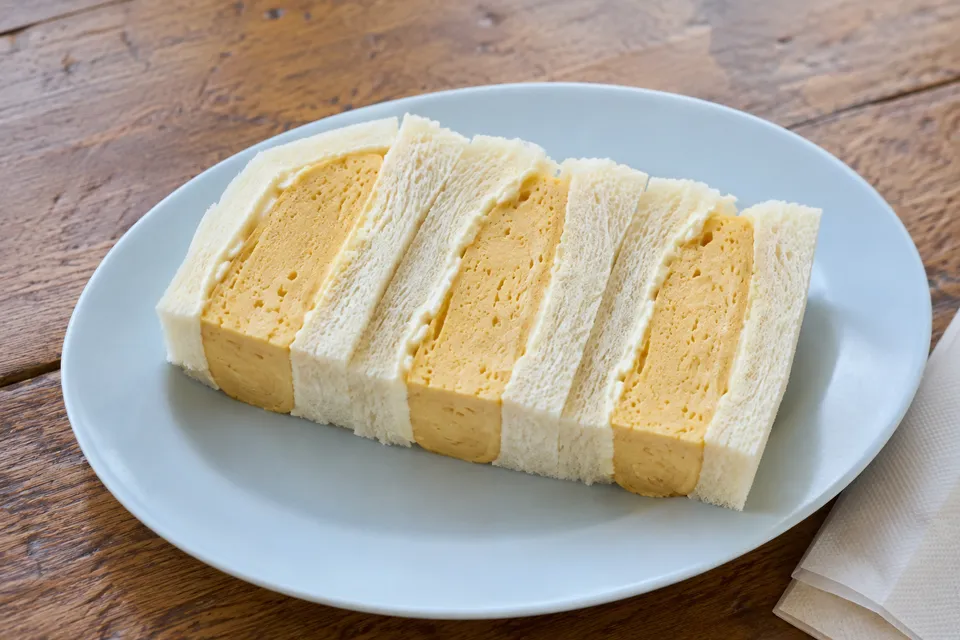

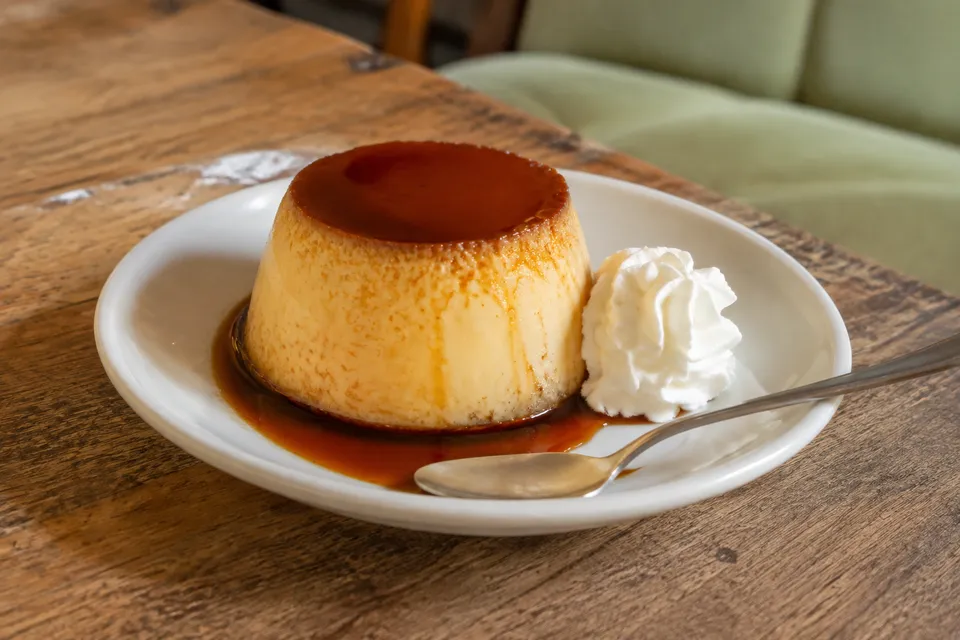

AI-generated editorial image; not a photograph of a named café or its food.
Read a morning-service menu in three steps
Read the hours
A morning-service cut-off is not the closing time. Check the day, time window and what happens if an item sells out.
Separate included items from extras
“Drink price only” is different from a “+” price. Salad or a sandwich in the picture may be a separate order.
Confirm the choices and total
Choose the bread and accompaniment, then any extras. Explain an allergy or dietary restriction before choosing.
A simple price example
Illustration only, not a real menu: a ¥600 drink with an included basic toast is ¥600. The same drink with a ¥250 extra dish is ¥850. If the food is shown as a separate ¥700 meal, check whether the drink is included rather than adding or subtracting it yourself.
モーニングは、何が付いて、全部でいくらですか?
What comes with the morning service, and how much is the total?
One current chain example is Komeda: its official morning page describes bread with a drink order from opening until 11:00, with choices of accompaniment and separately priced side dishes. This is Komeda’s offer, not the rule for all cafés. Availability varies by shop; use the current branch menu before visiting.
Sources: Komeda: morning service
Food allergies: confirm with the actual shop
These dish descriptions are not allergen lists. Tell staff the specific food you must avoid before ordering. Check every component, including bread, spreads, sauces, drinks and garnishes, and ask about shared utensils, toasters, pans and scoops. If staff cannot confirm, do not assume the dish is suitable.
Sources: Consumer Affairs Agency: food allergies when eating out / Komeda: allergy information and limitations
Before you open the door
Is morning service always free?
No. A basic accompaniment may be included with a qualifying drink during the stated hours; larger sets and side dishes may cost extra. Check the actual shop’s menu and total before ordering.
Can I visit without speaking Japanese?
You can often order by pointing to the menu and using a short phrase, but an English menu or English-speaking staff is not guaranteed. If you have an allergy, do not rely on pointing alone: show the specific allergen and confirm ingredients and cross-contact with staff.
Does “jun-kissa” mean smoke-free or allergy-safe?
No. The name does not certify either. Check the actual shop’s smoking policy, ingredients, preparation and access requirements separately.
Keep exploring from this cup
Sources & review notes
Source facts and article quality reviewed on · Next planned review: .
Historical claims follow the named organisations’ accounts; origin disputes are kept visible. The scenes and tasting suggestions are editorial guidance, not reports of an on-site visit. Menus, prices, availability and access can change. English and Japanese were checked with AI-assisted editorial review, not a human native-speaker review.