32 SWEETS · 12 MONTHS · 4 WAYS TO READ
The season arrives before the sweetness.
A cherry leaf, burdock, translucent starch, moon-shaped dumplings, chestnut and yuzu. Move beyond “pretty Japanese sweets”: read why this shape appears now, connect it to craft and place, then choose one on the road.
- 32
- individual deep reads
- 12
- monthly entrances
- 4
- ways to browse
AN EDIBLE YEAR
Begin with the month you travel.
These months are discovery cues, not national stock guarantees. A confectionery counter may anticipate the next season before the street does.
- HanabiramochiNew Year folds miso, burdock and court memory into one soft sweet.
- UguisumochiA green, powder-soft sign that spring is being imagined before it arrives.
- SakuramochiCompare a baked skin with grainy Domyoji mochi before the blossoms disappear.
- Hanami dangoThree colours turn a seated blossom pause into an edible rhythm.
- KashiwamochiAn oak leaf carries Children’s Day before revealing the filling.
- MinazukiKyoto marks the half-year with a triangle of imagined ice and azuki.
- KuzuzakuraA translucent wrapper makes visual coolness part of the recipe.
- MizuyokanA softer set and cooler finish make bean paste feel newly light.
- Tsukimi dangoThe moon, harvest and a regional dumpling shape share one evening.
- Chestnut kintonChestnut harvest is concentrated into one hand-shaped autumn mouthful.
- Yuzu yokanCitrus peel lifts a sliceable bean sweet into the beginning of winter.
- Nerikiri / jo-namagashiSnow, pine and plum appear as designs before the landscape changes.
HOW TO USE THE ATLAS
Learn to choose, not memorise.
The same name can hide different recipes, while similar ingredients become new seasonal designs. Read month, texture, poetic name and eating time in that order.
- 01
Begin with your travel month
The wagashi calendar often anticipates the street season. Use your month as an entrance, then ask what is actually available that day.
- 02
Choose one texture
Chewy, crisp, trembling-soft or crumbly. A familiar mouthfeel can open an unfamiliar name.
- 03
Separate the poetic name from the recipe
A poetic name may reveal the season, not the ingredients. Read filling, skin, flavouring and shared process product by product.
- 04
Buy for a specific eating time
A fresh sweet may change faster than your itinerary. Check date, refrigeration and fragility, then know where you will eat it.
THE 32-SWEET ATLAS
Browse by season, texture and place.
Filtering stays on this page. Choices are not saved, located or sent to Analytics. “This month” uses the current month in Japan Standard Time.
Showing 32 sweetsThe edible calendar
These sweets appear around blossoms, festivals, heat, harvest and the turn of the year. Availability is local and often brief.
12 sweetsHanabiramochi
花びら餅 · はなびらもちA folded white-and-pink mochi with miso bean paste and a slender piece of burdock showing at both ends
- Taste
- Sweet white bean and miso with an earthy, lightly savoury line
- Texture
- Soft mochi around a firmer, fibrous centre
- Season
- Look in the first days of January; production dates vary and many shops finish it quickly
- Place
- Kyoto roots; now found at New Year in wagashi shops around Japan
Uguisumochi
うぐいす餅 · うぐいすもちA small oval or pinched gyuhi sweet around bean paste, dusted green with kinako or coloured powder
- Taste
- Bean sweetness with toasted soybean aroma
- Texture
- Supple and powder-soft outside, smooth or textured within
- Season
- Often appears from late winter into early spring; it marks anticipation rather than an exact bird-watching date
- Place
- Wagashi shops nationwide; associated with the approach of spring
Sakuramochi
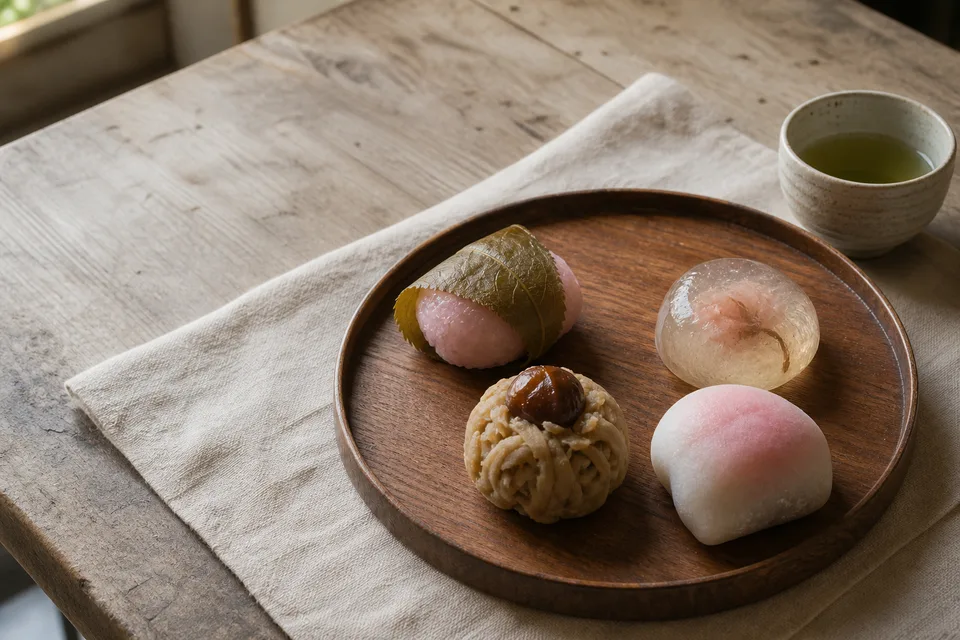
桜餅 · さくらもちSweet bean paste wrapped in either a thin baked skin or visible glutinous-rice grains, then a salted cherry leaf
- Taste
- Sweet bean, floral-leafy aroma and a small salt contrast
- Texture
- Tender crepe-like skin or softly grainy mochi, depending on style
- Season
- Strongest around the cherry season, though some specialists sell it longer
- Place
- Two famous families: Chomeiji-style around Tokyo and Domyoji-style associated with Kansai
Hanami dango
花見団子 · はなみだんごThree small dumplings—commonly pink, white and green—on one skewer
- Taste
- Mild rice sweetness; flavouring varies by maker
- Texture
- Dense, bouncy and clean-chewing
- Season
- Sold around blossom season; dates follow local bloom and retail calendars
- Place
- Cherry-viewing stalls, wagashi shops and supermarkets across Japan
Kashiwamochi
柏餅 · かしわもちA folded rice-flour mochi around sweet filling, wrapped in an oak leaf
- Taste
- Bean sweetness; some versions use miso bean paste
- Texture
- Smooth, softly elastic mochi against a dry aromatic leaf
- Season
- Centred on the period around 5 May; shops decide their own start and finish
- Place
- Nationwide around Children’s Day, with regional differences in leaf and filling
Minazuki
水無月 · みなづきA white triangular uiro base topped with azuki beans
- Taste
- Restrained sweetness, rice or flour notes and sweet beans
- Texture
- Firm-soft, slightly sticky and clean-cut
- Season
- Closely associated with 30 June and the summer purification period; availability is not guaranteed outside it
- Place
- Kyoto, especially around the end of June
Kuzuzakura
葛桜 · くずざくらBean paste seen through a translucent starch gel, sometimes presented on a leaf
- Taste
- Cool bean sweetness with little added aroma
- Texture
- Slippery, tender and lightly elastic
- Season
- A summer sweet designed as much for visual coolness as temperature
- Place
- Summer counters nationwide; recipes and names vary
Mizuyokan
水羊羹 · みずようかんA softer, higher-moisture block of bean-and-agar confection than many firm yokan
- Taste
- Clean azuki sweetness, sometimes very restrained
- Texture
- Cool, smooth and softly set
- Season
- Commonly a summer signal, while regional calendars can reverse the expectation
- Place
- Nationwide in summer; winter customs also exist in parts of Japan
Tsukimi dango
月見団子 · つきみだんごPlain white dumplings, stacked or shaped differently by region; some forms include bean paste
- Taste
- Mild rice sweetness or a richer bean-coated bite
- Texture
- Dense and chewy; regional versions may be softer
- Season
- Around the traditional autumn moon-viewing dates, which shift on the modern calendar
- Place
- Nationwide for moon-viewing, with strongly regional forms and displays
Ohagi / botamochi
おはぎ・ぼたもち · おはぎ・ぼたもちPartly pounded glutinous rice covered with sweet bean paste, kinako, sesame or other coatings
- Taste
- Rice and bean sweetness; coatings shift aroma sharply
- Texture
- Grainy-soft rice inside, smooth, chunky or powdery outside
- Season
- Closely associated with spring and autumn equinox periods, but sold more widely too
- Place
- Households, supermarkets and wagashi shops nationwide, especially around the equinoxes
Chestnut kinton
栗きんとん · くりきんとんCooked chestnut worked with sugar into a small, softly ridged chestnut-like mound
- Taste
- Direct chestnut sweetness with little distraction
- Texture
- Fine, crumbly-soft and moist rather than sticky
- Season
- An autumn confection tied to the chestnut harvest; sale periods depend on each maker
- Place
- Strongly associated with eastern Gifu; similar names can describe different New Year foods
Yuzu yokan
柚子羊羹 · ゆずようかんA set bean or white-bean confection scented with yuzu peel or juice
- Taste
- Sweet bean followed by bright peel bitterness and citrus aroma
- Texture
- Clean slice, dense or soft depending on water content
- Season
- Yuzu feels especially at home from late autumn into winter, though packaged versions may be sold longer
- Place
- Citrus-growing regions and winter seasonal counters; not one protected regional recipe
Bean, rice and shaped classics
Learn the building blocks—an, mochi, steamed skins, moulded shells and poetic seasonal names—before judging by appearance alone.
8 sweetsDaifuku
大福 · だいふくA round mochi skin enclosing sweet bean paste or another filling
- Taste
- Bean-led sweetness; salt or fruit may sharpen it
- Texture
- Soft, stretchy shell around smooth or chunky filling
- Season
- Available year-round; seasonal fillings change the encounter
- Place
- Nationwide, from specialist wagashi shops to supermarkets and convenience stores
Ichigo daifuku
いちご大福 · いちごだいふくA whole strawberry with red or white bean paste inside mochi
- Taste
- Fresh acidity, sweet bean and mild rice
- Texture
- Juicy fruit against sticky-soft mochi
- Season
- Strongest from winter through spring, following shop supply rather than one fixed date
- Place
- A modern nationwide favourite, especially visible during strawberry season
Dorayaki
どら焼き · どらやきTwo round griddle cakes sandwiching sweet bean paste
- Taste
- Caramelised cake aroma and bean sweetness
- Texture
- Springy-cakey outside, moist or chunky inside
- Season
- Year-round, with chestnut, butter or seasonal fillings appearing around it
- Place
- Nationwide; specialist shops and packaged shelves offer very different textures
Manju
饅頭 · まんじゅうBean paste enclosed in a steamed or baked flour-based skin
- Taste
- From plain bean sweetness to brown sugar, miso, sake or yuzu
- Texture
- Tender steamed crumb or firmer baked skin
- Season
- Year-round; local festival and hot-spring versions may follow their own calendars
- Place
- Nationwide, with countless local skins, fillings and marks
Yokan
羊羹 · ようかんBean paste and sugar set into a sliceable block, commonly with agar
- Taste
- Concentrated bean sweetness; matcha, chestnut, sesame and fruit create branches
- Texture
- Dense and clean-cut or softer with more water
- Season
- Year-round, with mizuyokan and ingredient-led versions marking seasons
- Place
- Nationwide; long-life blocks and fresh seasonal versions share the name
Monaka
最中 · もなかCrisp wafers made from glutinous rice enclose bean paste or another filling
- Taste
- Toasted rice shell and bean sweetness
- Texture
- Dry-crisp shell against dense moist filling
- Season
- Year-round; humidity and assembly time matter more than a season
- Place
- Nationwide; moulds often carry a local flower, building, animal or crest
Nerikiri / jo-namagashi
練り切り・上生菓子 · ねりきり・じょうなまがしA soft bean-paste-based outer layer coloured and shaped around a bean filling
- Taste
- Gentle bean sweetness with subtle flavouring
- Texture
- Fine, moist and marzipan-like, without the same fat profile
- Season
- Designs often anticipate blossoms, rain, water, leaves, moon and snow
- Place
- Tea-related wagashi shops nationwide; designs change before the season peaks
Rakugan
落雁 · らくがんFine sugar and grain or bean powders pressed into carved moulds and dried
- Taste
- Concentrated sweetness with a quiet grain aroma
- Texture
- Dry, powdery, crisp-tender and dissolving
- Season
- Year-round; moulds, colours and motifs follow events and seasons
- Place
- Tea, festival and temple-town confectionery traditions across Japan
Counter, café and street textures
Made to eat warm, cool, crisp or trembling-soft, these sweets reward choosing the right moment rather than carrying them all day.
4 sweetsTaiyaki
たい焼き · たいやきFish-shaped griddle cakes filled from head to tail—or not, depending on the shop
- Taste
- Toasty batter and hot bean paste; custard or savoury fillings also exist
- Texture
- Crisp-edged or cake-soft outside, dense and hot inside
- Season
- Especially comforting in cool weather, but many shops sell year-round
- Place
- Street counters and shopping districts nationwide
Kintsuba
きんつば · きんつばA firm block of bean paste lightly coated in batter and seared on several sides
- Taste
- Bean-forward, with a faint toasted flour edge
- Texture
- Dense, slightly granular filling with a thin tender skin
- Season
- Year-round; chestnut or sweet-potato variations feel especially autumnal
- Place
- Wagashi shops nationwide; often cooked visibly on a griddle
Warabi mochi
わらび餅 · わらびもちSoft translucent pieces dusted generously with kinako, often served with dark syrup
- Taste
- Toasted soybean and dark-sugar sweetness
- Texture
- Trembling, slippery and softly elastic
- Season
- Popular in warm months, though specialist versions are available beyond summer
- Place
- Sweet shops, cafés and summer retail counters nationwide
Anmitsu
あんみつ · あんみつA bowl of agar cubes, sweet bean paste, fruit and syrup, often with peas, mochi or ice cream
- Taste
- Sweet, tart, bean-rich and syrupy in alternating bites
- Texture
- Firm-cool agar, soft bean, juicy fruit and chewy additions
- Season
- Especially appealing in warm weather; toppings follow the venue
- Place
- Kanmihidokoro sweet cafés and casual restaurants nationwide
Regional signatures
Rice, mountain yam, green soybeans, port-city exchange and household festival work turn local history into something you can hold.
8 sweetsUiro
ういろう · ういろうA steamed, lightly sweetened starch cake, commonly made from rice flour but not universally
- Taste
- Mild grain sweetness; matcha, azuki and brown sugar are common branches
- Texture
- Firm-soft, smooth and slightly sticky
- Season
- Year-round, with colours and additions following the season
- Place
- Associated strongly with Nagoya, but made in several regions with different histories and formulas
Sasa dango
笹団子 · ささだんごMugwort-coloured rice dumplings around bean paste, tied and wrapped in bamboo grass leaves
- Taste
- Herbal mugwort, rice and sweet bean with a leafy aroma
- Texture
- Dense-chewy dumpling inside flexible leaves
- Season
- Associated with early summer and household traditions, though souvenir production extends availability
- Place
- Niigata Prefecture
Yatsuhashi / nama yatsuhashi
八ッ橋・生八ッ橋 · やつはし・なまやつはしEither a crisp baked cinnamon rice cracker or a soft unbaked sheet, often folded around filling
- Taste
- Cinnamon-led, with bean, matcha or seasonal filling
- Texture
- Crisp and brittle, or soft and chewy—the name covers both
- Season
- Year-round; seasonal fillings change rapidly in major shops
- Place
- Kyoto
Nagasaki castella
長崎カステラ · ながさきカステラA tall rectangular sponge rich with egg and sugar, often cut into measured slices
- Taste
- Egg, honey-like sweetness and caramelised bottom notes
- Texture
- Moist, fine-crumbed and springy, sometimes with sugar crystals below
- Season
- Year-round and strongly suited to gifts
- Place
- Nagasaki, shaped by centuries of port exchange and Japanese adaptation
Karukan
かるかん · かるかんA white steamed cake made with rice flour and mountain yam; filled karukan manju is a related form
- Taste
- Mild rice sweetness and clean yam aroma
- Texture
- Light, porous and springy rather than sticky
- Season
- Year-round, connected to Kagoshima souvenir and tea culture
- Place
- Kagoshima
Zunda mochi
ずんだ餅 · ずんだもちMochi coated with a vivid paste of crushed young soybeans and sugar
- Taste
- Green soybean freshness, nutty depth and sweetness
- Texture
- Sticky mochi with a slightly coarse, moist paste
- Season
- Strongly associated with summer soybean season, though modern shops extend availability
- Place
- Miyagi and wider southern Tohoku associations
Habutae mochi
羽二重餅 · はぶたえもちThin, pale squares or folds of very soft sweet mochi, dusted to stay separate
- Taste
- Clean rice sweetness with little filling
- Texture
- Silky, tender and highly elastic
- Season
- Year-round as a regional gift
- Place
- Fukui
Beko mochi
べこ餅 · べこもちSteamed rice-flour sweets patterned in contrasting colours, from leaf forms to intricate cut designs
- Taste
- Simple rice and sugar, sometimes with brown-sugar depth
- Texture
- Firm-chewy with a smooth steamed surface
- Season
- Often linked with May festivals and household making, though sale periods vary
- Place
- Aomori and Hokkaido traditions, with local differences in shape and occasion
WHERE THE SWEET MEETS THE JOURNEY
Change the question with the place.
The right choice changes between eating at the counter and carrying a gift from a station. Put date, temperature, fragility and the recipient’s dietary needs first.
Neighbourhood wagashi shop
Best for names, season and same-day texture. Ask what was made today and how soon it should be eaten.
Department-store basement
Useful for comparing regions and makers in one place. Packaging does not remove the need to read each label.
Station and airport
Good for durable gifts, but “popular” does not mean suitable for your flight, destination-country rules or recipient.
Kanmihidokoro sweet café
Choose anmitsu, warabi mochi or seasonal plates when temperature and assembly are part of the sweet.
RICE FLOUR IS NOT A SAFETY LABEL
Do not decide safety from visible mochi and bean paste.
Wheat, egg, milk, soy, sesame, nuts, yam, honey, gelatin, fruit or alcohol may enter through skin, filling, powder, flavouring, glaze or syrup. Moulds, steamers, griddles, knives, tongs and production lines may be shared. Read the current label every time for packaged food, and ask the shop about today’s product and shared process before eating.
Japanese to show the shop
今日だけ、または今月だけの和菓子はありますか?
Do you have a wagashi sold only today or this month?このお菓子の名前と、表している季節を教えてください。
Please tell me the name of this sweet and the season it represents.今日中に食べますか? 冷蔵が必要ですか?
Should I eat it today? Does it need refrigeration?私には食物アレルギーがあります。原材料と、共用の器具・設備を確認できますか?
I have a food allergy. Can you check the ingredients and any shared tools or equipment?BEFORE THE FIRST SWEET
Five questions at the counter.
Is every wagashi made with red bean paste?
No. White bean, chestnut, sweet potato, rice, flour, sugar, agar, fruit and many other ingredients appear. Even a familiar name does not reveal the complete recipe.
Are wagashi vegan or gluten-free?
Do not assume so. Egg, milk, wheat, honey, gelatin, fish-derived processing aids or shared production may appear. Confirm the current product and process.
Should I eat the leaf?
It depends. A salted cherry leaf may be eaten by preference; oak and bamboo grass leaves are normally wrappers. Ask the maker when unsure.
Why is the sweet for next season already on sale?
Wagashi often anticipates a season rather than waiting for its peak. Retail calendars and regional climate also differ, so the counter can feel a few weeks ahead of the street.
What makes a good souvenir?
Match storage, date, fragility, individual wrapping and destination rules to the journey. Fresh mochi may be memorable but a poor choice for a long flight.
OFFICIAL SOURCES & CLEAR LIMITS
Read the season deeply; ask about today’s product.
Sources checked 2026-09-02. This atlas compares representative forms without compressing every region and shop into one definition. Sale period, price, ingredients, recipe, storage, date and design vary by product.
AI language quality review completed; no human native-speaker review was performed.
- MAFF: Japanese sweets, types, seasons and regions
- MAFF: The history of wagashi
- Consumer Affairs Agency: Food allergy labelling
- Consumer Affairs Agency: Allergies when dining out or buying prepared food
- MAFF: Wagashi history and seasonal design
- MAFF: Tokyo-style sakuramochi
- MAFF: Niigata sasa dango
- MAFF: Our Regional Cuisines
- JNTO: Sakura-flavoured sweets for spring