18 BOXES · 5 REGIONS · ONE RAIL JOURNEY
Open the lid. Let the landscape explain lunch.
Ekiben does more than shrink regional food into a box. It carries platform time, craft that survives cooling, containers, railway lines and the voice of the seller: an edible rail map.
- 18
- deep profiles
- 1885
- common origin claim; disputed
- 0
- fixed prices or stock claims
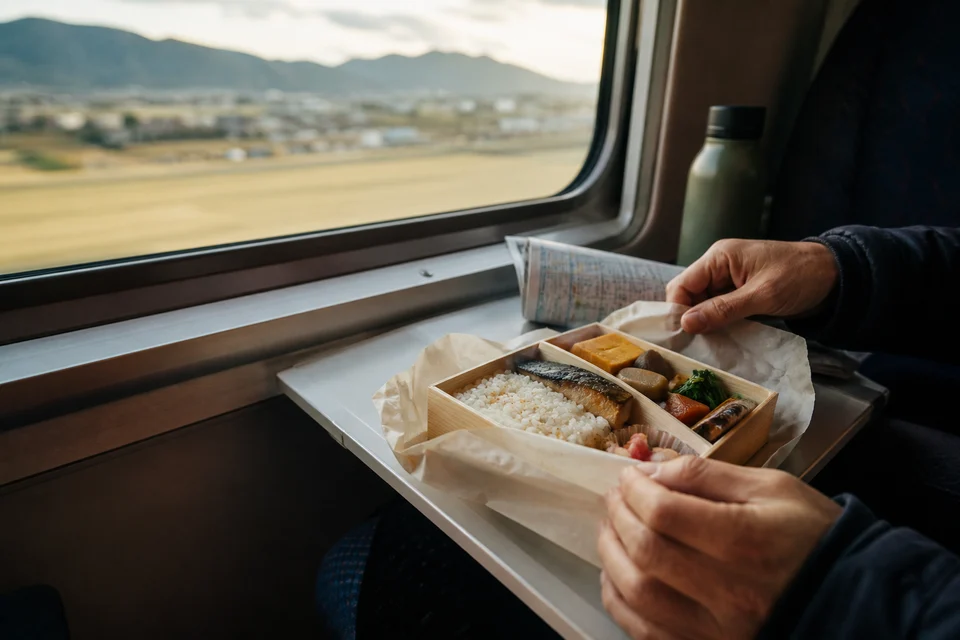
THE FIRST BOX IS A FEELING
Choose for today’s journey, not for fame.
Start with train, luggage, appetite, aroma and eating time. Missing one famous box harms the journey less than rushing to open it somewhere unstable.
Flat, familiar and easy to manage on a seat table.
Three different preservation ideas: simmer, season and press.
Memorable, but decide before buying whether the vessel fits your luggage.
Heat, music or a folklore-shaped lid turns opening into an event.
BEFORE YOU BUY
Can this train become a table?
Japan has no single onboard-eating rule. Train type, equipment, crowding and operator guidance come first. If uncertain, waiting is the calmest decision.
- 1A seat table is provided
Common on Shinkansen and limited express services. Check signs, then continue.
- 2Not crowded; aroma is manageable
Consider neighbours, sound and where every wrapper will go.
- 3You will eat within the use-by window
“Later” is a storage decision, not only a schedule decision.
AN EDIBLE RAIL ATLAS
Read 18 boxes through place and design.
Filtering happens only on this device. The selected value is not sent to Analytics; only the visible count changes.
Showing 18 boxesHOKKAIDO & TOHOKU
Hokkaido & Tohoku
Cold-water seafood, warming mechanisms and rice built for northern journeys.
Ikameshi
A small squid becomes an entire railway meal.
- Taste
- Sweet-savoury squid and concentrated rice
- Texture
- Tender-chewy squid; compact sticky rice
Hokkaido seafood box
There is no single “Hokkaido seafood bento”—that is the fascination and the warning.
- Taste
- Briny, sweet and highly product-dependent
- Texture
- Roe pops; crab flakes; rice stays compact
Self-heating gyutan bento
Pull one string and the lunch changes temperature in your hands.
- Taste
- Salty grilled beef, barley-rice sweetness
- Texture
- Springy slices and separate barley grains
Gyuniku Domannaka
Two textures of beef turn the rice into a changing landscape.
- Taste
- Sweet soy, beef richness and rice
- Texture
- Sliced beef plus fine savoury crumbles
KANTO
Kanto
Railway history, ceramic vessels, harbour-city flavours and Tokyo everyday food.
Daruma Bento
Lunch ends, and the red daruma may begin a second life as a coin bank.
- Taste
- Gentle soy, mushroom and mountain-vegetable savour
- Texture
- Many small, distinct bites over seasoned rice
Toge no Kamameshi
A clay pot remembers the long pause before trains crossed Usui Pass.
- Taste
- Dashi rice, sweet-savoury chicken and mountain vegetables
- Texture
- Moist rice with many simmered textures
Shumai Bento
Yokohama’s railway identity fits into a box designed to stay satisfying when cool.
- Taste
- Pork savour, rice and a sequence of seasoned sides
- Texture
- Firm rice, juicy dumpling and crisp accents
Chicken Bento
A 1964 railway lunch preserves one of Japan’s cheerful versions of “Western” food.
- Taste
- Tomato-seasoned rice, fried chicken and gentle tang
- Texture
- Crisp-soft chicken and separate rice grains
Fukagawameshi
A modern station box points back to the working waterfront of Edo Tokyo.
- Taste
- Clam umami, ginger, sweet miso and burdock
- Texture
- Moist seasoned rice with chewy clam and root vegetables
CHUBU & HOKURIKU
Chubu & Hokuriku
Pressed fish, crab, beef and containers that announce their home region.
Masu no Sushi
Lift the bamboo leaves and a whole round landscape appears.
- Taste
- Clean vinegar, gentle fish richness and rice sweetness
- Texture
- Pressed, sliceable and cohesive
Echizen Kanimeshi
The crab-shaped red container is honest about the box’s single obsession.
- Taste
- Concentrated crab, savoury rice and marine sweetness
- Texture
- Flaked meat over moist cooked rice
Moo Taro Bento
Open the cow-shaped lid and the song “Furusato” begins.
- Taste
- Sweet sukiyaki beef with ginger warmth
- Texture
- Tender beef over firm rice
KANSAI & CHUGOKU
Kansai & Chugoku
Octopus, conger eel and festive sushi along the Seto Inland Sea.
Hipparidako Meshi
A small pottery pot turns Akashi’s octopus and fishing pots into one object.
- Taste
- Octopus savour, dashi rice and sweet-savoury sides
- Texture
- Springy octopus and moist rice in a pot
Himeji Anagomeshi
A station founded in early railway history carries Setouchi conger eel westward.
- Taste
- Sweet glaze, grilled eel aroma and rice
- Texture
- Soft-flaky fish with glazed rice
Momotaro no Matsurizushi
A peach-shaped box makes Okayama folklore the doorway to a festival table.
- Taste
- Bright vinegar, sweet egg and varied seafood
- Texture
- A mosaic of soft, crisp and chewy toppings
Anagomeshi Ueno
The box belongs to the threshold between railway and ferry.
- Taste
- Charred-sweet conger eel and deeply seasoned rice
- Texture
- Layered soft eel with edges of grill
KYUSHU
Kyushu
Chicken rice and dried shiitake turn preservation into deep comfort.
Orio Kashiwameshi
Three stripes—chicken, egg, nori—make railway geometry edible.
- Taste
- Chicken stock, sweet-savoury mince and egg
- Texture
- Seasoned rice beneath three fine stripes
Miyazaki Shiitakemeshi
Dried mushrooms prove that preservation can deepen, not merely extend, flavour.
- Taste
- Deep sweet-savoury shiitake and chicken rice
- Texture
- Plush mushrooms, fine chicken and egg
THE 90-SECOND STATION READ
Read six things before admiring the lid.
- 01Maker
Separate similar names and event editions.
- 02Use-by time
Match it to the time you will actually eat.
- 03Storage
Follow print, not assumptions about room temperature.
- 04Ingredients & allergens
Include sides, sauce and stock.
- 05Container
Check heat, ceramic, electronics and carrying.
- 06Utensils
Pressed sushi may need its included knife.
RAILWAYS MADE A NEW MEAL
Do not force one tidy “first ekiben.”
A widely told origin places two rice balls and pickles in bamboo wrapping at Utsunomiya Station in 1885. Other origin claims exist, and even the definition of ekiben is cultural. More important than crowning a winner is seeing how rail demanded new thinking about time, distance, temperature and packaging.
Japan’s first railway opens; changing travel time creates demand for food en route.
The best-known origin claim—kept visibly as one claim among several.
The Shinkansen era changes where boxes are chosen without erasing them.
Reservations, fairs, frozen editions and self-heating boxes keep redefining the station boundary.
SOURCE & LIMIT
Go deep on story; stay modest about stock.
Sources checked 2026-08-29. Price, station, delivery time, reservation, ingredients, container and use-by details change. These pages support a decision; they do not guarantee same-day stock or food safety.