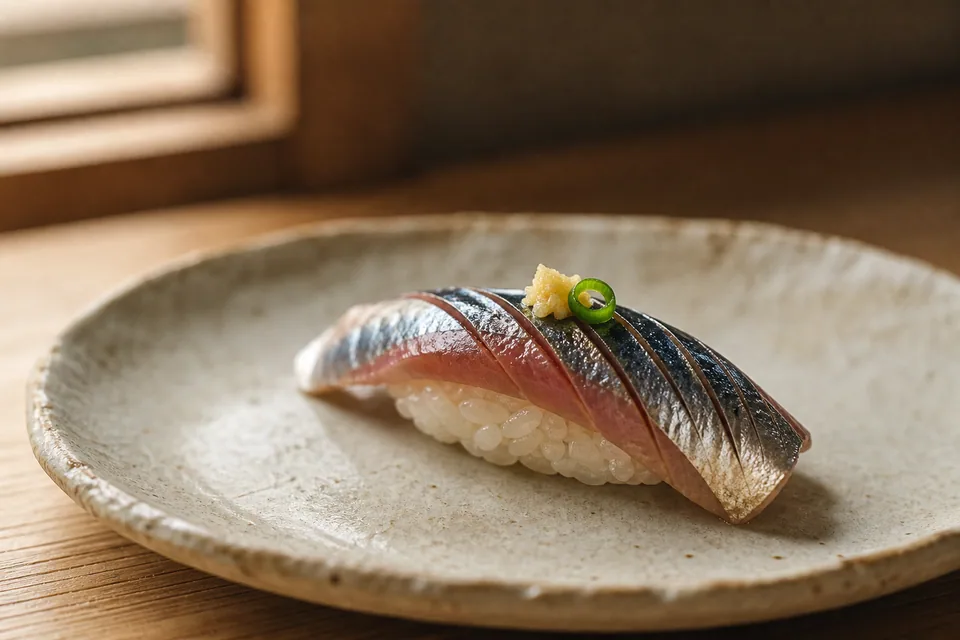
An editorial view of Sardine (iwashi). Texture cue: Very tender and delicate. Portion and preparation differ by restaurant.
18 / 60
Nigiri
Deep savoury flavour and rich oil
Very tender and delicate
Soy sauce
Ginger, scallion or a light brush may already be present; taste first.
Wasabi
Ginger is often more typical than extra wasabi.
WHAT IS IT?
What exactly is Sardine (iwashi)?
Iwashi on sushi commonly means sardine, especially Japanese sardine, with rich flavour, fine bones and delicate flesh.
CHOOSE WITH CONFIDENCE
Place Sardine (iwashi) beside two close relatives.
Salmon and Hamachi / buri are two doors from Sardine (iwashi) into a wider range. Decide whether flavour or texture is the difference you want to test first.
PLACE & CONTEXT
Sardine (iwashi) and place
Chiba and the Pacific coast have strong sardine-fishing and food-culture associations.
YOUR FIRST PIECE
Build the baseline before seasoning.
Observe the piece in front of you instead of searching for an etiquette test. Taste: Deep savoury flavour and rich oil. Texture: Very tender and delicate. Soy guidance: Ginger, scallion or a light brush may already be present; taste first. Wasabi guidance: Ginger is often more typical than extra wasabi.
Confirm Sardine (iwashi)’s name, origin and preparation at the restaurant.
The 2026-09-02 editorial check included the boundary between public context and restaurant facts. Make the final Sardine (iwashi) decision from current labels and staff answers.