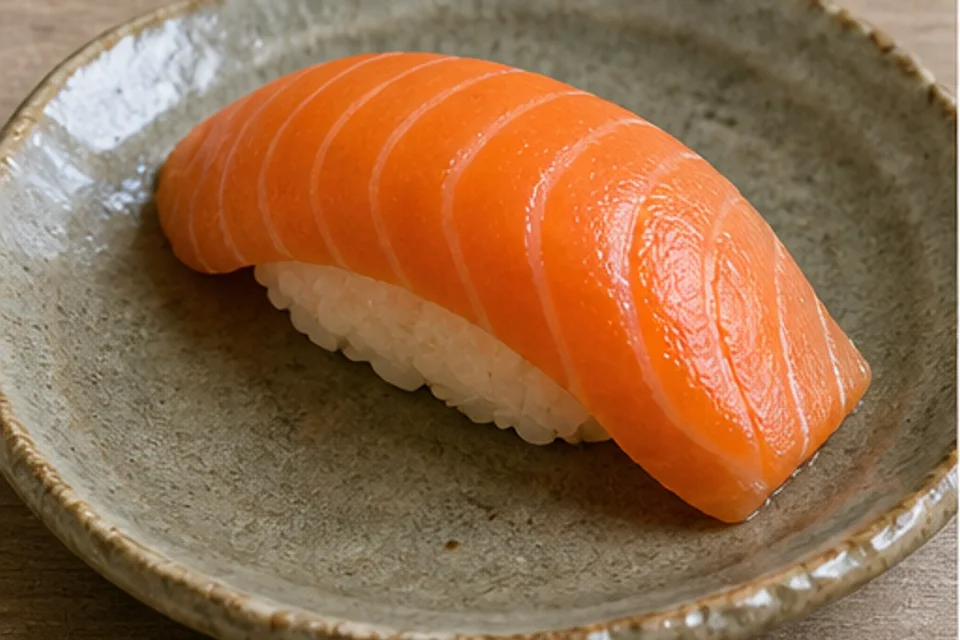
An editorial reference for the shape and colour of Salmon; the shop’s cut and supply will change the real piece.
05 / 60
Nigiri
Mild and gently sweet
Soft and oily
Soy sauce
A small touch works; ponzu or onion may already be added.
Wasabi
Optional and approachable.
WHAT IS IT?
What exactly is Salmon?
Sushi “salmon” usually means salmonid fish supplied for raw eating; it is not one single origin or production method.
CHOOSE WITH CONFIDENCE
Place Salmon beside two close relatives.
Salmon gives this taste cue: Mild and gently sweet. Compare taste with Hamachi / buri; if the texture cue—Soft and oily—interested you more, choose Greater amberjack (kanpachi) instead.
PLACE & CONTEXT
Salmon and place
Popular nationwide today; it is not one of the classic Edo-period sushi toppings.
YOUR FIRST PIECE
Build the baseline before seasoning.
When it arrives, notice taste and texture before changing it. Taste: Mild and gently sweet. Texture: Soft and oily. Soy guidance: A small touch works; ponzu or onion may already be added. Wasabi guidance: Optional and approachable.