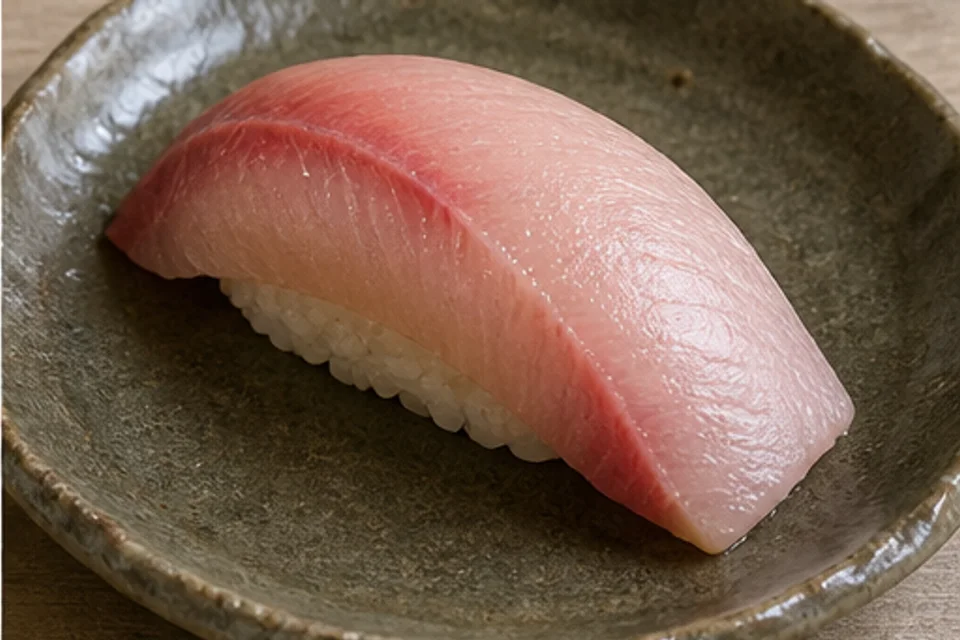
Nigiri
Rich, savoury and slightly sweet
Firm when young, richer as it matures
- Soy sauce
- A small amount usually suits it.
- Wasabi
- Optional; ginger may be used in some preparations.
WHAT IS IT?
What exactly is Hamachi / buri?
Hamachi and buri are growth names for Japanese amberjack. The exact boundary and name change by region and market.
CHOOSE WITH CONFIDENCE
Place Hamachi / buri beside two close relatives.
Salmon and Greater amberjack (kanpachi) are two doors from Hamachi / buri into a wider range. Decide whether flavour or texture is the difference you want to test first.
PLACE & CONTEXT
Hamachi / buri and place
Names can change with size and region; Toyama and Hokuriku have strong winter-buri associations.
YOUR FIRST PIECE
Build the baseline before seasoning.
Observe the piece in front of you instead of searching for an etiquette test. Taste: Rich, savoury and slightly sweet. Texture: Firm when young, richer as it matures. Soy guidance: A small amount usually suits it. Wasabi guidance: Optional; ginger may be used in some preparations.
SOURCE & LIMIT
Confirm Hamachi / buri’s name, origin and preparation at the restaurant.
The 2026-09-02 editorial check included the boundary between public context and restaurant facts. Make the final Hamachi / buri decision from current labels and staff answers.