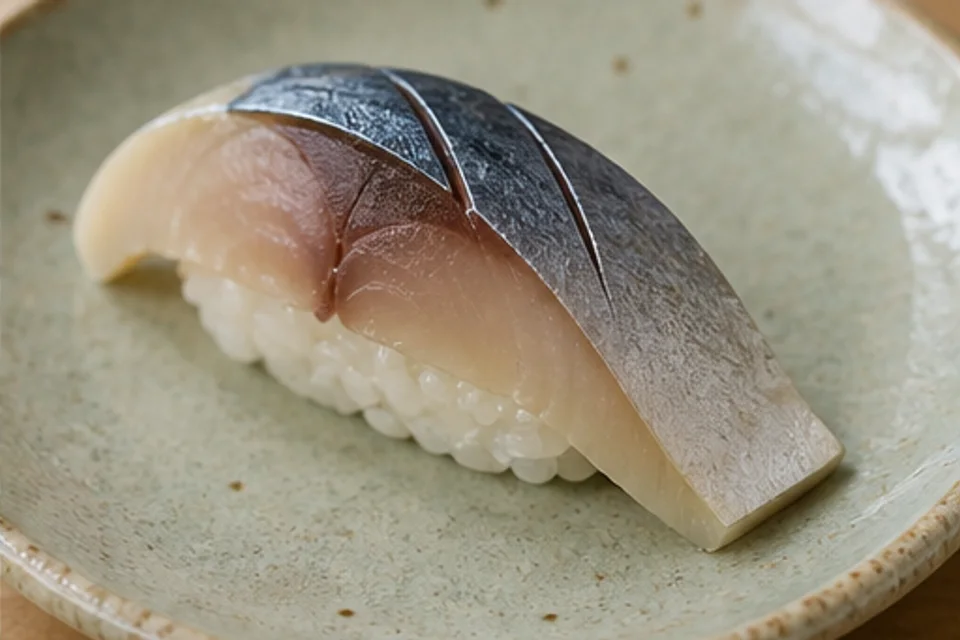
An editorial reference for the shape and colour of Mackerel (saba); the shop’s cut and supply will change the real piece.
17 / 60
Nigiri
Full, oily and often tangy
Dense and tender
Soy sauce
Often seasoned or cured; taste first.
Wasabi
Ginger may be used; extra wasabi is optional.
WHAT IS IT?
What exactly is Mackerel (saba)?
Saba may mean chub mackerel or spotted mackerel. Sushi often cures it with salt and vinegar because the flesh changes quickly.
CHOOSE WITH CONFIDENCE
Place Mackerel (saba) beside two close relatives.
Mackerel (saba) gives this taste cue: Full, oily and often tangy. Compare taste with Salmon; if the texture cue—Dense and tender—interested you more, choose Hamachi / buri instead.
PLACE & CONTEXT
Mackerel (saba) and place
Regional preparations include Kyoto-style saba-zushi; this page shows nigiri.
YOUR FIRST PIECE
Build the baseline before seasoning.
When it arrives, notice taste and texture before changing it. Taste: Full, oily and often tangy. Texture: Dense and tender. Soy guidance: Often seasoned or cured; taste first. Wasabi guidance: Ginger may be used; extra wasabi is optional.