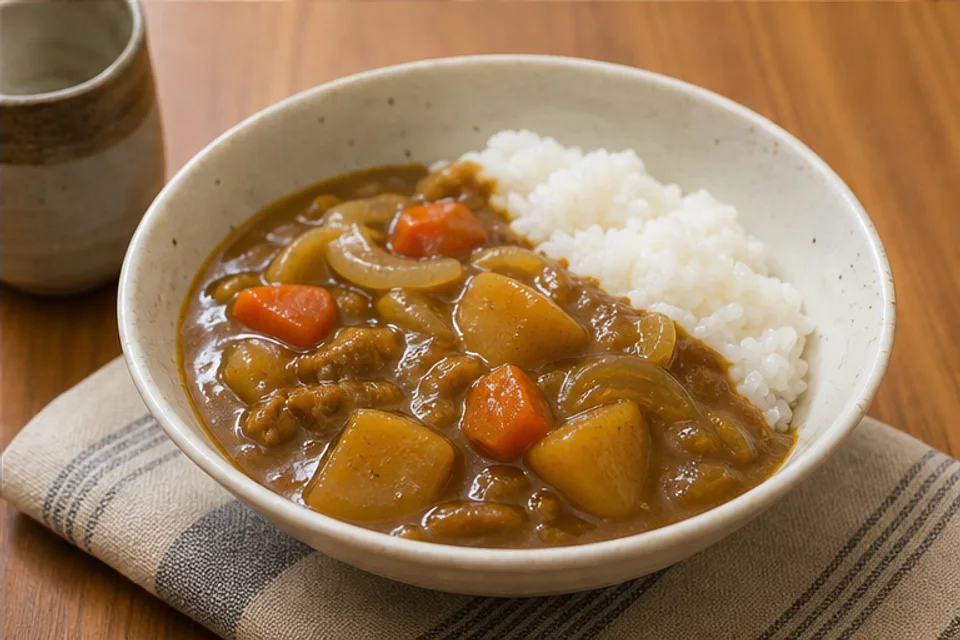
An original editorial image made to explain the dish, not a specific shop or product.
HOW TO READ THIS DISH
Four things to know first
Place
Curry is nationwide home food. Yokosuka tells a naval-curry story; Hokkaido is strongly associated with soup curry.
Compared with food abroad
Compared with many South Asian curries, the common Japanese rice style is usually thicker, roux-based and often sweeter. It is its own adaptation, not a substitute.
Ordering
Choose rice size, spice level and toppings separately. “Regular” can still be large; check the gram display when shown.
Allergy cue
Roux commonly contains wheat, dairy, soy or fruit; stocks, fried toppings and shared fryers require separate checks.
One adaptation became many ordinary Japanese meals
The thick curry served with rice in Japan developed through European-style curry and then moved into military, institutional and home cooking. Packaged roux made the dish easy to repeat, while households changed the meat, vegetables, sweetness and next-day use. Yokosuka’s naval-curry story and Hokkaido’s soup curry show why “Japanese curry” is a family of local adaptations, not one national recipe.
At a counter shop, ordering may be a sequence: rice amount, curry type, spice level, then toppings. A fried cutlet adds texture and also possible shared-oil allergens; pickles provide acidity rather than decoration alone. At home, the package remains the authority for water and allergens even when a family adds its own apple, coffee or leftover vegetables.
OFFICIAL SOURCES
Separate cultural context from same-day decisions.
Sources checked 2026-09-02. Use the venue’s current information for hours, price, ingredients, origin and service style.