ONE RICE BALL · MANY JAPANS
One rice ball, many Japans.
What goes inside the rice? Should the nori stay crisp until the last second, soften around the grains, disappear entirely or give way to a regional leaf? Onigiri looks simple, yet it compresses rice, preservation, home life, retail design and local memory into one handheld food.
- 42
- types with individual guides
- 6
- taste and form families
- EN / JA
- one shared content model
07:10 · BEFORE THE SHINKANSEN
Choose among similar triangles in 30 seconds.
Begin with the large filling name. Next identify whether the nori is kept separate, already touching the rice or absent. Finish with the use-by date, storage line and allergen information. A photograph alone can hide small but important differences such as mentaiko versus tarako, or kombu versus okaka.
FIND A FIRST BITE
Narrow 42 types with one useful cue.
Filtering stays on this page and the selected value is not sent to Analytics. “Looks plant-forward” is a shortlist for checking ingredients, never a dietary or allergen guarantee.
42 types shown
No types match this cue. Return to “All 42”.
Seafood favourites
Seafood favourites
Salty, savoury and often easy to spot by a fish name.
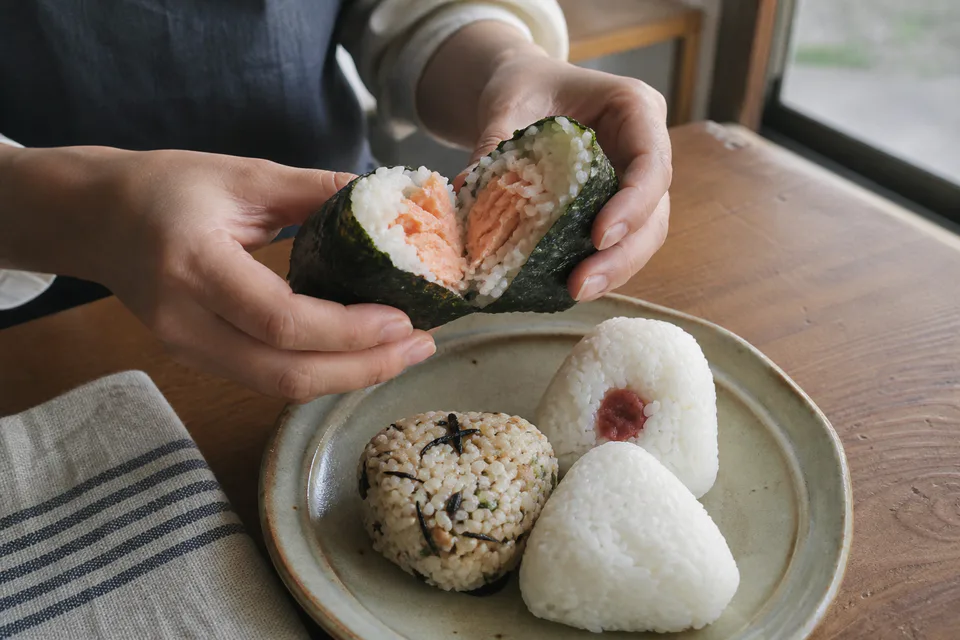
Salmon
Salty, clean and familiar
- Texture
- Soft flakes against springy rice
- Label cue
- Look for 鮭 or しゃけ; products may use different salmon species and seasoning.
Tuna mayonnaise
Creamy, mild and gently savoury
- Texture
- Soft filling with moist rice
- Label cue
- Look for ツナマヨ, シーチキン or tuna-and-mayonnaise wording; brand language varies.
Spicy cod roe
Salty, marine and chilli-warm
- Texture
- Fine roe grains that loosen through rice
- Label cue
- Look for 明太子; 辛子明太子 explicitly signals chilli seasoning.
Salted cod roe
Direct saltiness with a gentle sea flavour
- Texture
- Fine grains; grilled versions become firmer
- Label cue
- Look for たらこ or 焼たらこ; it is not automatically the same heat as mentaiko.
Okaka bonito flakes
Smoky, savoury and soy-forward
- Texture
- Fine soft flakes that cling to rice
- Label cue
- Look for おかか or かつお; the friendly name hides a fish ingredient.
Salmon roe
Rich, briny and often soy-seasoned
- Texture
- Juicy beads that pop
- Label cue
- Look for いくら; price and amount often differ from everyday fillings.
Grilled mackerel
Oily, smoky and assertively savoury
- Texture
- Firm flakes with a moist edge
- Label cue
- Look for 焼さば or 鯖; the fish may sit across the top or inside.
Baby sardines & sansho
Salty with a citrusy, tingling spice
- Texture
- Tiny chewy fish among rice grains
- Label cue
- Look for ちりめん山椒; 山椒 is aromatic and numbing, different from chilli heat.
Meat & egg
Meat & egg
Richer fillings that often behave like a compact meal.
Fried chicken
Juicy, savoury and often garlicky
- Texture
- Crisp coating softens inside rice
- Label cue
- Look for 唐揚げ or 鶏唐; sauce and mayonnaise versions are separate products.
Chicken soboro
Gentle soy sweetness
- Texture
- Fine, crumbly and easy to bite
- Label cue
- Look for 鶏そぼろ or とりそぼろ; egg may be mixed into some versions.
Beef shigureni
Sweet soy, ginger and deep meat savour
- Texture
- Tender strands with a concentrated sauce
- Label cue
- Look for 牛しぐれ or 牛肉; it is usually a richer premium filling.
Yakiniku (grilled meat)
Sweet, garlicky and richly savoury
- Texture
- Chewy slices and moist sauce
- Label cue
- Look for 焼肉, 牛焼肉 or 焼肉マヨ; the meat and sauce differ by product.
Pork miso
Deep, sweet-salty and fermented
- Texture
- Dense mince or tender small pieces
- Label cue
- Look for 豚みそ or 肉みそ; 肉みそ does not always specify pork.
Egg soboro
Mild, softly sweet and comforting
- Texture
- Fluffy crumbs against springy grains
- Label cue
- Look for 玉子, 卵 or たまご; Japanese labels use more than one character form.
Pickles & vegetables
Pickles & vegetables
Bright, sour or earthy choices—still check dashi and seasoning.
Umeboshi
Brightly sour and distinctly salty
- Texture
- Soft fruit paste; a stone may remain
- Label cue
- Look for 梅 or 梅干; 種あり means a stone may remain.
Kombu tsukudani
Deep soy savour with gentle sweetness
- Texture
- Soft-chewy strips
- Label cue
- Look for 昆布 or こんぶ; おかか昆布 also contains fish flakes.
Takana greens
Salty, leafy and sometimes chilli-hot
- Texture
- Fine crunchy stems among soft rice
- Label cue
- Look for 高菜; 高菜明太 adds spicy cod roe and 高菜炒め may use oil or stock.
Nozawana greens
Freshly salty with a mild mustard-green edge
- Texture
- Light crunch from leaf stalks
- Label cue
- Look for 野沢菜; additions such as わさび or じゃこ change both flavour and ingredients.
Takuan radish
Salty, gently sweet and pickled
- Texture
- A clear, crisp bite
- Label cue
- Look for たくあん or 沢庵; colours and sweeteners vary by product.
Ume & shiso
Sour, salty and vividly herbal
- Texture
- Soft paste with fine leaf pieces
- Label cue
- Look for 梅しそ or 梅紫蘇. ゆかり and 大葉 indicate shiso, but neither name alone proves that ume is included.
Kinpira burdock
Earthy, sweet-soy and sometimes chilli-warm
- Texture
- Fibrous, crisp-chewy strips
- Label cue
- Look for きんぴら or ごぼう; sesame is a common finishing ingredient.
Edamame & salted kelp
Fresh bean sweetness and concentrated salt
- Texture
- Firm beans among soft grains
- Label cue
- Look for 枝豆 and 塩こんぶ; the two ingredients may be listed separately.
Rice first
Rice first
Plain salt, grains, beans and seasoned mixed rice.
Shio musubi
Clean rice sweetness edged with salt
- Texture
- Every grain and shaping pressure is exposed
- Label cue
- Look for 塩むすび, 塩おにぎり or 銀しゃり; check whether nori is included.
Wakame rice
Lightly salty with a soft sea aroma
- Texture
- Tender seaweed between rice grains
- Label cue
- Look for わかめご飯 or わかめ; sesame may be visible on the surface.
Hijiki mixed rice
Earthy, soy-savoury and gently sweet
- Texture
- Soft seaweed with small vegetable bites
- Label cue
- Look for ひじき; carrot, fried tofu or beans may be part of the mix.
Gomoku mixed rice
Layered soy savour with gentle sweetness
- Texture
- Many small bites in one soft rice ball
- Label cue
- Look for 五目; the word means a varied mixture, not one fixed list of five ingredients.
Mushroom takikomi rice
Woodland aroma and light soy savour
- Texture
- Tender mushroom pieces among moist rice
- Label cue
- Look for きのこ, 舞茸, しめじ or 松茸; the named mushroom changes price and aroma.
Sekihan red-bean rice
Mild bean sweetness with salty sesame
- Texture
- Chewy sticky rice and firm beans
- Label cue
- Look for 赤飯; ごま塩 may be included in a separate packet.
Regional forms
Regional forms
Leaves, kelp, tempura and local seasonings turn the form into a map.
Tenmusu
Sweet-savoury batter, shrimp and salt
- Texture
- Soft rice, springy shrimp and softened crust
- Label cue
- Look for 天むす; the shrimp tail may be visible from the top.
Mehari-zushi
Salty, leafy and gently fermented
- Texture
- A broad tender leaf around firm rice
- Label cue
- Look for めはりずし; despite the name, it is usually discussed as a regional rice parcel rather than modern vinegared sushi.
Hiroshima greens musubi
Clean saltiness and a mustard-green aroma
- Texture
- Tender leaf with a light stalk crunch
- Label cue
- Look for 広島菜; it identifies the regional vegetable, not a generic spinach leaf.
Oki bakudan onigiri
Mineral-rich seaweed and simple rice
- Texture
- Thick, yielding seaweed around dense rice
- Label cue
- Look for ばくだんおにぎり in the Oki Islands; elsewhere “bakudan” can mean a different large or mixed item.
Okinawa pork & egg
Salty meat, mellow egg and nori
- Texture
- A layered, sandwich-like bite
- Label cue
- Look for ポークたまご or ポーク玉子; optional miso, tuna or fried fillings create many versions.
Gonju
Meaty, soy-savoury and stock-rich
- Texture
- Mixed rice with small tender pieces
- Label cue
- Look for ごんじゅう in southern Chiba; it may be shaped as a rice ball or served as seasoned rice.
Kensan-yaki
Toasty rice and sweet fermented miso
- Texture
- Crisp edges over a soft centre
- Label cue
- Look for けんさ焼き in Niigata; it may not appear in an ordinary convenience-store onigiri case.
Toyama tororo-kombu
Tangy, marine and softly savoury
- Texture
- Soft fibres that melt against rice
- Label cue
- Look for とろろ昆布 or 昆布おにぎり in Toyama; this is a coating, unlike a hidden tsukudani centre.
Grilled & modern
Grilled & modern
Crisp surfaces, new shapes and familiar modern flavours.
Soy-sauce yaki onigiri
Toasty, salty and caramelised
- Texture
- Crisp shell and soft steaming centre
- Label cue
- Look for 焼おにぎり or 醤油焼き; frozen, shop and grilled-to-order versions heat differently.
Miso yaki onigiri
Sweet-salty, fermented and deeply toasted
- Texture
- Sticky glaze over a crisp edge
- Label cue
- Look for 味噌焼き or みそ焼き; regional miso and sweetening create different colours.
Onigirazu
Changes completely with the layered filling
- Texture
- A broad sandwich-like cross-section
- Label cue
- Look for おにぎらず; the visible cross-section helps identify fillings but not sauces or shared equipment.
Cheese okaka
Smoky, creamy and sharply savoury
- Texture
- Melting or firm cheese with soft flakes
- Label cue
- Look for チーズおかか; heated products and chilled cheese cubes feel different.
Curry onigiri
Warm spice, savoury depth and often mild sweetness
- Texture
- Seasoned grains; filled versions can be saucy
- Label cue
- Look for カレー; 焼きカレー, キーマ or チーズ indicate very different versions.
Fried-rice onigiri
Roasted soy, scallion and savoury oil
- Texture
- Loose seasoned grains held more gently
- Label cue
- Look for 炒飯 or チャーハン; meat, egg and seasoning differ even when the colour looks similar.
THE PRINTED ARROWS WIN
Let that package’s 1–2–3 arrows lead.
A common “te-maki” wrapper keeps rice and nori apart until opening; a “jika-maki” wrapper lets them touch from the start. Packaging still differs by company and item. The diagram explains the idea, not one universal operation—follow the printing on the wrapper in front of you.
- 1Find the top tabCheck the number and arrow direction.
- 2Pull the centre as printedDo not force it in the opposite direction.
- 3Remove each sideKeep the rice centred on the nori.
CARRY · EAT · DISCARD
A small meal still has a time and place.
Carry it
Follow the product’s storage line and use-by date. For handmade rice balls, use clean wrap or gloves, avoid sealing while hot and use an ice pack and insulated bag for longer carrying. Ume filling does not make warm storage automatically safe.
Eat on a train
Food is often possible on long-distance trains with seat tables, while it is generally avoided on crowded commuter services. Follow signs and operator guidance, then consider smell, sound, nearby passengers and the wrapper you must carry away.
Read ingredients
Ume, kelp or vegetables may still come with bonito stock, wheat in soy sauce, sesame or shared production. Never infer “vegetarian,” “gluten-free” or “allergen-free” from the photograph or category; decide from current packaging and venue information.
RICE BEFORE THE TRIANGLE
A history that resists an “oldest onigiri” headline.
A roughly 2,000-year-old lump of rice has been found, but its purpose is uncertain. Heian-period tonjiki is often treated as a prototype. Today, onigiri and omusubi usually name the same food, while the words’ origins and supposed shape-by-region rules have competing explanations. The long story becomes more interesting when evidence and folklore stay visibly separate.
SHOW THIS
Ask about one filling and one allergen at a time.
このおにぎりの具は何ですか? 原材料とアレルギー表示も見せてください。
What is inside this onigiri? Please also show me the ingredients and allergy information.