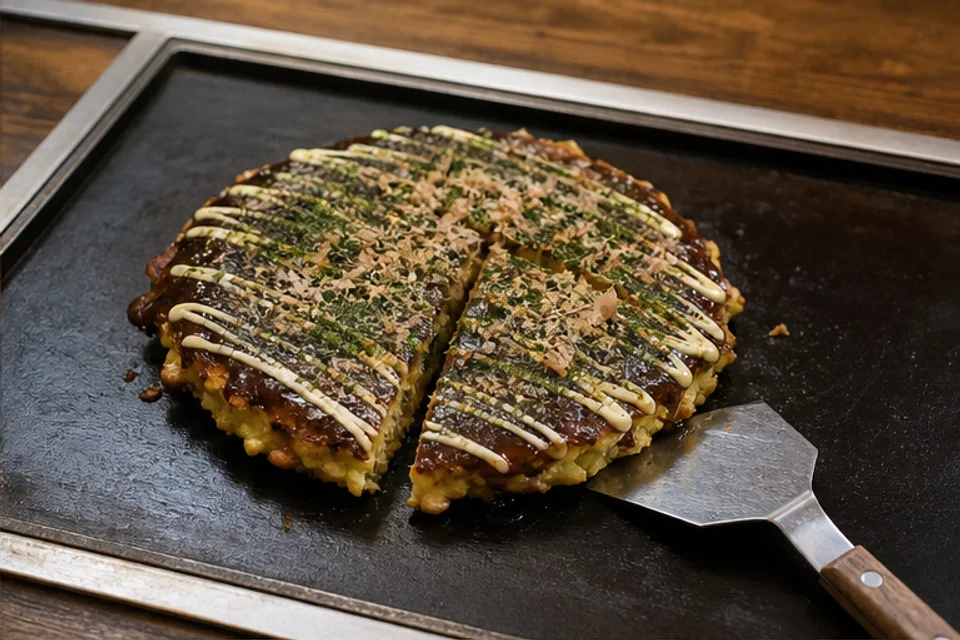
An original editorial image made to explain the dish, not a specific shop or product.
HOW TO READ THIS DISH
Four things to know first
Place
Kansai-style generally mixes batter and cabbage; Hiroshima-style layers ingredients and commonly adds noodles. Tokyo’s monjayaki is related but distinct.
Compared with food abroad
It may look like a savoury pancake, but cabbage, dashi, sauce and tabletop cooking give it a different structure and meal rhythm.
Ordering
Choose the regional style first, then the main filling. Staff may cook it, or the table may have a hot plate—ask before touching the tools.
Allergy cue
Wheat, egg, soy and seafood are common. Sauces, mayonnaise and shared hot plates also need checking.
A TABLE IN JAPAN
The hot plate tells you which meal you have entered
Okonomiyaki became everyday urban food by turning flour, cabbage, stock and available fillings into a meal cooked in front of the diner. “As you like it” is part of the name, but that does not mean there is no craft: batter balance, cabbage cut, heat, turning and sauce timing change the result. Kansai and Hiroshima styles are better understood as two constructions with their own local pride.
In a Kansai-style shop, cabbage and batter may arrive already mixed; in a Hiroshima-style shop, watch a thin base, cabbage, fillings and noodles become layers. If staff cook it, leave it on the hot plate and cut one bite at a time with the small spatula. The plate stays hot long after the first photograph.
OFFICIAL SOURCES
Separate cultural context from same-day decisions.
Sources checked 2026-09-02. Use the venue’s current information for hours, price, ingredients, origin and service style.