THE 10-SECOND ANSWER
What is zuwaigani?
Zuwaigani is snow crab. Sushi commonly presents its leg meat so that delicate sweetness, clean brine and fine fibres remain easy to notice. Names such as Echizen-gani or Matsuba-gani are tied to regional landing and branding systems; they are not a promise that every piece labelled snow crab shares one origin, grade or season.
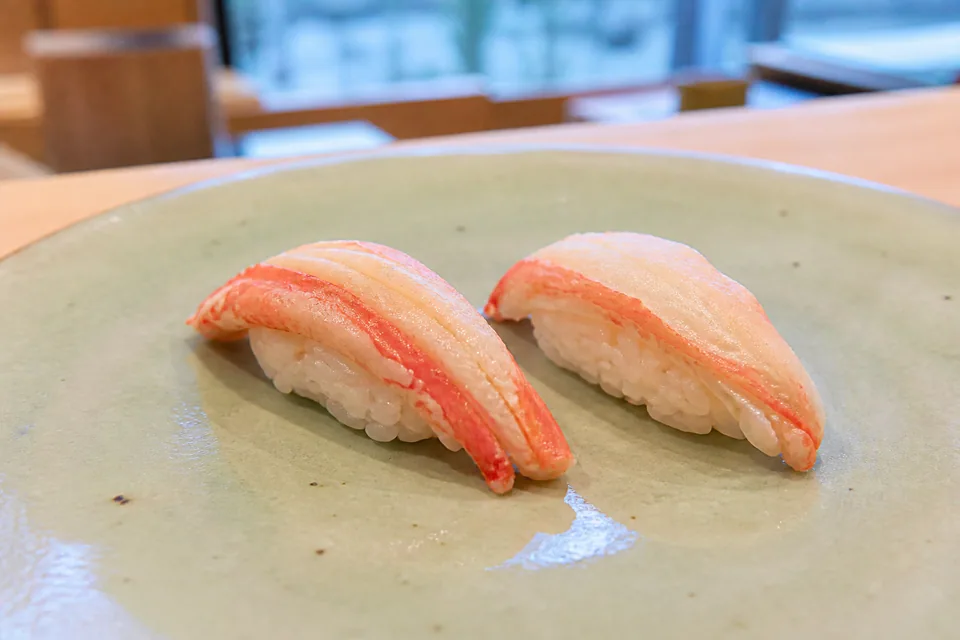
Nigiri
Delicate sweetness and clean brine
Soft fibres with gentle spring
- Soy sauce
- Use almost none; crab may already be seasoned.
- Wasabi
- Usually not used.
Read on the menu
Look for ずわいがに, ズワイガニ or the English “snow crab.” A regional brand name should be checked against the shop’s origin information.
Taste
The pleasure is quiet: delicate sweetness and clean salinity rather than the forceful richness of a fatty fish.
Texture
Leg meat separates into fine, soft fibres with a gentle spring. Raw, boiled and processed preparations can feel markedly different.
Begin with almost no soy
Crab may already be seasoned. Try it first, then add only enough soy to sharpen—not cover—the sweetness.
QUESTIONS BEHIND THE NAME
Questions to settle before buying or ordering.
Is every snow crab Echizen-gani or Matsuba-gani?
No. Those names are associated with particular regional landing and branding systems. Ask for the origin and current label instead of treating a regional name as a universal synonym.
When is zuwaigani in season?
Winter is the classic fishery season in several regions, but opening and closing dates vary by region and sex. A Fukui calendar, for example, explains Echizen crab; it is not a calendar for every snow crab sold in Japan.
Is crab sushi raw?
Not always. It may be raw, boiled, thawed or otherwise processed. Ask the restaurant or read the product description before deciding how the serving was prepared.
Why does the price vary so much?
Species, origin, regional brand, grade, fishing or processing condition, the part used and the restaurant format can all change the price. The short menu name cannot explain the difference alone.
What should I check for allergies or dietary needs?
Crab is a crustacean and requires a direct allergen check. Also confirm sauces, soy and wheat, other seafood and shared knives, boards or cooking areas with the restaurant’s current information.
WHAT IS IT?
What exactly is Snow crab (zuwaigani)?
Zuwaigani is snow crab. Sushi may use leg meat as nigiri, while regional names such as Echizen-gani or Matsuba-gani indicate landing area and quality systems.
CHOOSE WITH CONFIDENCE
Place Snow crab (zuwaigani) beside two close relatives.
Compare Scallop (hotate) for taste—Sweet and clean—and Squid (ika) for texture—From crisp to creamy depending on species and cut. Set each beside Snow crab (zuwaigani), one plate at a time.
PLACE & CONTEXT
Snow crab (zuwaigani) and place
Winter crab culture is strong in Hokuriku, Sanin and northern Japan, with regional brand names.
YOUR FIRST PIECE
Build the baseline before seasoning.
Begin with the restaurant’s preparation exactly as served. Taste: Delicate sweetness and clean brine. Texture: Soft fibres with gentle spring. Soy guidance: Use almost none; crab may already be seasoned. Wasabi guidance: Usually not used.
SOURCE & LIMIT
Confirm Snow crab (zuwaigani)’s name, origin and preparation at the restaurant.
Sources were rechecked on 2026-09-07. Keep general knowledge of Snow crab (zuwaigani) separate from the product information in front of you.