THE 10-SECOND ANSWER
Is engawa a fish?
Engawa is not one species of fish. It is the working muscle along the fins of hirame or another flatfish, sliced for sushi. That is why two pieces called engawa can differ in size, fat, texture and price: the menu name identifies the cut, but not necessarily the exact flatfish.
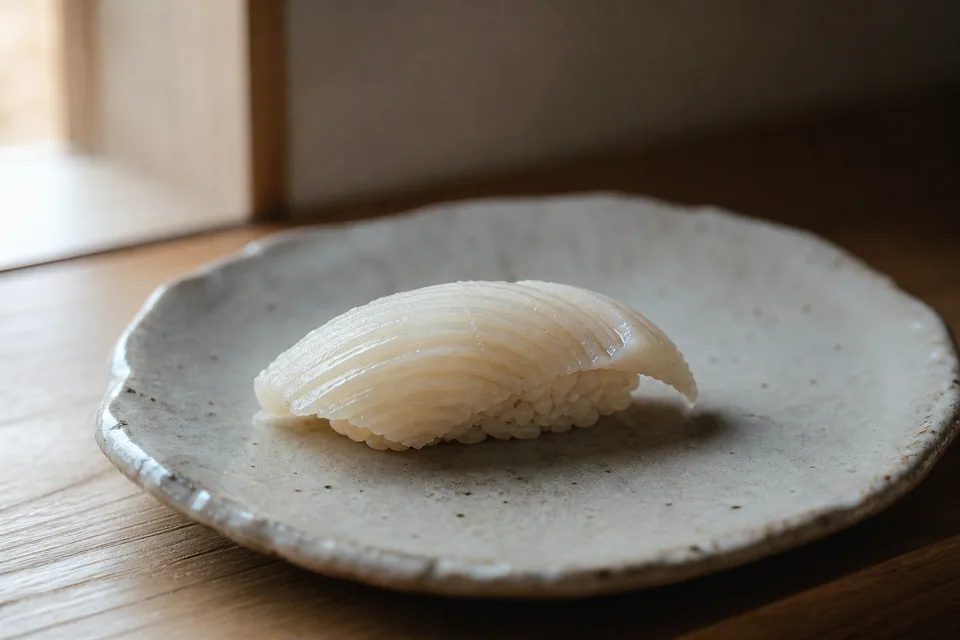
Nigiri
Rich, sweet and lightly marine
Springy, slightly crunchy
- Soy sauce
- A light touch or salt suits it.
- Wasabi
- Optional; often unnecessary with salt or citrus.
Read on the menu
Look for えんがわ or エンガワ. If the exact fish matters, ask “Nan no sakana no engawa desu ka?” before ordering.
Taste
Expect gentle marine flavour and a sweetness carried by fat. Salt, citrus or a house seasoning can make extra soy sauce unnecessary.
Texture
The appeal is the contrast between spring and a light crunch. Species, cut thickness and knife work can make one serving feel delicate and another much firmer.
A revealing first bite
Try it exactly as served. If there is a second piece, add only a light touch of soy to compare the fish with the restaurant’s seasoning.
QUESTIONS BEHIND THE NAME
Questions to settle before buying or ordering.
Is engawa always hirame?
No. Hirame is a well-known source, but other flatfish can be sold as engawa. Ask the restaurant or read the current product label if the species, origin or price matters to you.
Why can engawa be inexpensive or expensive?
The underlying species, origin, amount obtainable from a fish, preparation and restaurant format can all differ. Price alone does not identify the fish, so the exact name is the useful question.
What does engawa taste like?
Many servings combine mild sea flavour, fatty sweetness and a springy, lightly crunchy bite. The balance is not fixed because “engawa” covers a cut from more than one flatfish.
Should I use soy sauce or wasabi?
First check whether salt, citrus or sauce has already been added. If not, use very little soy sauce. Wasabi is optional; it should not hide the texture and gentle sweetness you came to compare.
What should I confirm for allergies or dietary needs?
Confirm the exact fish, soy sauce and other seasonings, wasabi and shared knives, boards or serving areas. The word engawa cannot guarantee ingredients, raw-fish handling or cross-contact.
WHAT IS IT?
What exactly is Engawa (flounder fin edge)?
Engawa is not a fish species. It is the hard-working muscle along the fins of hirame or other flatfish; the source fish should be named when possible.
CHOOSE WITH CONFIDENCE
Place Engawa (flounder fin edge) beside two close relatives.
Compare Sea bream (tai) for taste—Delicate, lightly sweet—and Flounder (hirame) for texture—Firm with a fine grain. Set each beside Engawa (flounder fin edge), one plate at a time.
PLACE & CONTEXT
Engawa (flounder fin edge) and place
A cut from the fin edge of hirame or other flatfish—not one single species.
YOUR FIRST PIECE
Build the baseline before seasoning.
Begin with the restaurant’s preparation exactly as served. Taste: Rich, sweet and lightly marine. Texture: Springy, slightly crunchy. Soy guidance: A light touch or salt suits it. Wasabi guidance: Optional; often unnecessary with salt or citrus.
SOURCE & LIMIT
Confirm Engawa (flounder fin edge)’s name, origin and preparation at the restaurant.
Sources were rechecked on 2026-09-07. Keep general knowledge of Engawa (flounder fin edge) separate from the product information in front of you.