THE 10-SECOND ANSWER
What does akami mean in tuna sushi?
Akami means the leaner red meat of tuna; it is a cut category, not one species. Compared with chutoro and otoro, it usually puts firm texture, clean savour and a longer tuna flavour ahead of melting fat. That makes one piece of akami a useful baseline before you compare richer cuts.
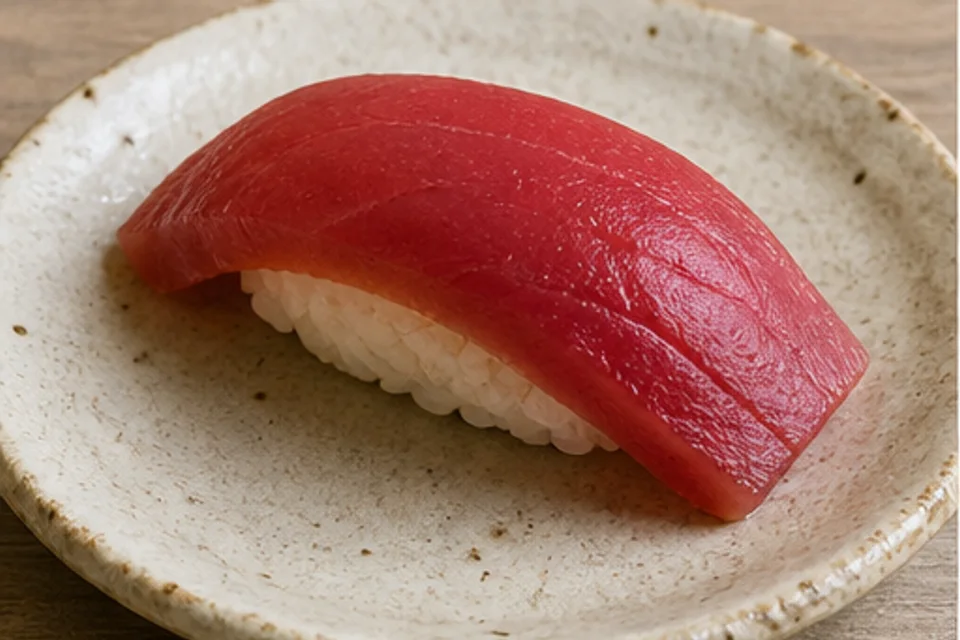
Nigiri
Clean, savoury and lean
Firm and smooth
- Soy sauce
- A light brush or a small touch suits it.
- Wasabi
- Often paired; ask for none if preferred.
Read on the menu
Look for 赤身, まぐろ or マグロ. A general “maguro” label may not state the species or exact cut, so ask when that distinction matters.
Taste before ranking
Akami is not simply a cheaper version of toro. It brings a firmer, cleaner expression of tuna, while chutoro and otoro shift the balance towards fat and softness.
Notice the preparation
Bright raw akami, briefly aged tuna and soy-marinated zuke can all reach the counter differently. If the surface is glossy or already brushed, taste before adding soy.
Compare next
Order akami beside chutoro. Keep the tuna family similar and let the change in fat, softness and finish become the subject of the next bite.
QUESTIONS BEHIND THE NAME
Questions to settle before buying or ordering.
Is akami a species of tuna?
No. Bluefin, bigeye, yellowfin and other tuna may be served as lean red meat. The menu must name the species separately if it wants to tell you which tuna is being used.
How is akami different from chutoro and otoro?
The useful distinction is the balance of lean muscle and fat. Akami is generally leaner and firmer; chutoro is intermediate; otoro places the strongest emphasis on fat and a melting texture. Exact fat varies by fish and cut.
When is akami in season?
There is no single nationwide month. Species, fishing area, wild or farmed supply, freezing and handling all matter. Ask which tuna and origin is being served before using a seasonal calendar.
Should I use soy sauce and wasabi?
Check whether the chef has brushed sauce or made zuke. If not, a light touch of soy can sharpen the savour without covering it. Wasabi is optional; some sushi already contains it between fish and rice.
What should I check for allergies or raw-fish concerns?
Confirm the exact fish, raw or marinated preparation, soy sauce, wheat, wasabi and shared knives or boards. Use the restaurant’s current information; the word akami does not guarantee the recipe, handling or cross-contact.
WHAT IS IT?
What exactly is Akami tuna?
Akami is the lean, deep-red muscle of tuna—not a species. Bluefin, bigeye and yellowfin can all be sold this way.
CHOOSE WITH CONFIDENCE
Place Akami tuna beside two close relatives.
After Akami tuna, use Chutoro tuna to move the flavour and Otoro tuna to change the texture. Order one at a time and test one contrast.
PLACE & CONTEXT
Akami tuna and place
Central to Edomae-style sushi; tuna origins vary by season and supplier.
YOUR FIRST PIECE
Build the baseline before seasoning.
Try the first piece before adding anything. Taste: Clean, savoury and lean. Texture: Firm and smooth. Soy guidance: A light brush or a small touch suits it. Wasabi guidance: Often paired; ask for none if preferred.
SOURCE & LIMIT
Confirm Akami tuna’s name, origin and preparation at the restaurant.
Sources checked 2026-09-09. This page helps you choose and ask about Akami tuna; it cannot guarantee freshness, allergens or safety.